Average Reaction Time by Age: What the Data Actually Shows
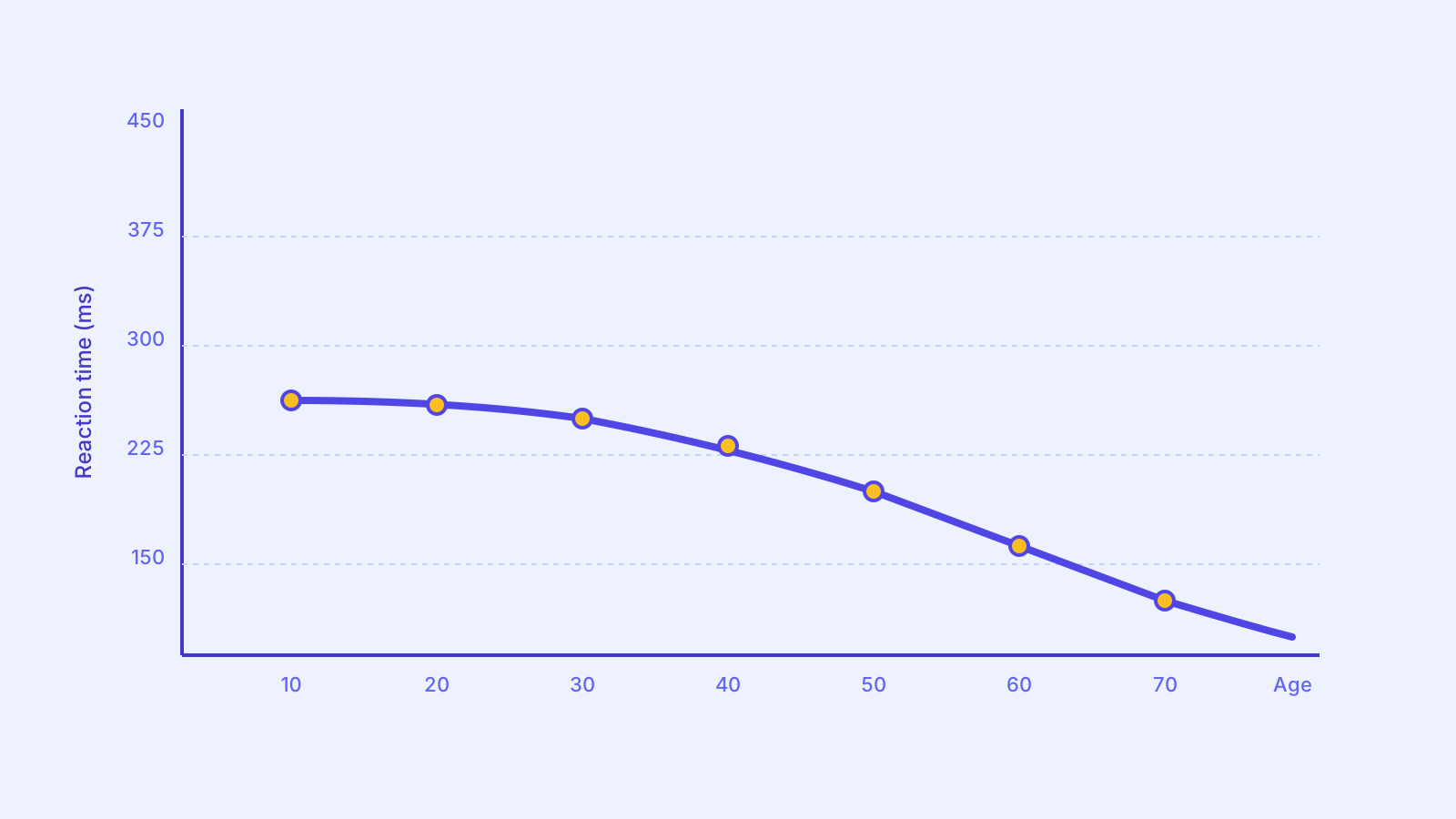
Reaction time creeps up across adulthood — slowly at first, faster later. Realistic ranges by age, why the curve bends, and what stays trainable at 50+.
Reaction time is one of the few cognitive measures with a genuinely boring, well-replicated relationship to age: it gets worse for everyone, slowly, and nobody opts out. The interesting part is the shape of the curve and how much room training leaves underneath it.
Rough ranges for simple reaction time
These are loose, pooled ranges from decades of laboratory studies of simple visual reaction tasks — wait for a signal, respond as fast as possible. Treat them as orientation, not pass/fail cutoffs:
- 18–25: roughly 190–250 ms. This is the physical peak for the full chain: eyes, brain, motor response.
- 26–35: roughly 200–260 ms. Most people notice nothing; the drift is real but small.
- 36–45: roughly 210–280 ms. Still close to peak for anyone active and rested.
- 46–60: roughly 230–320 ms. The curve starts bending; variance between individuals grows.
- 60+: roughly 260–400+ ms. The population average rises, but active, regularly practicing older adults often score comfortably above the average for their age.
Why the curve bends
Raw nerve conduction barely slows with age. The losses live upstream: older adults tend to gather more evidence before committing (a caution strategy, not a hardware fault), make more feed-forward corrections, and — biggest of all — sleep and general fitness change. Reaction time correlates strongly with cardiovascular fitness at every age because the test is secretly an aerobic-brain test: a well-perfused brain processes the signal faster.
The gap between average and trained
Averages hide the most hopeful fact: fit, regularly practiced people in their 50s and 60s can match — and sometimes beat — sedentary people decades younger on simple reaction tasks. Practice also tends to shave tens of milliseconds off a person’s own baseline, though the size of the gain varies widely between individuals. The age penalty and the trainable component are both real and mostly independent — aging moves the population average up, training moves your personal number down, and where you end up depends on both.
What to do with this information
- If you are under 30: your times will not stay this good by themselves. Build the habit now; you are depositing into a baseline you will spend for decades.
- If you are 35–50: train and sleep. This is the cheapest insurance available, and cardio appears to matter as much as the drills themselves.
- If you are 50+: the drills can still work — the body keeps responding to practice well into later life. Compare yourself to your own six-month-ago self, not to twenty-year-olds online.
Reaction speed is largely a use-it-or-lose-it system. The age curve describes what happens on average; consistent practice decides where you sit relative to that curve — it does not redraw the curve itself.