Simple vs Choice Reaction Time: Why They Feel Completely Different
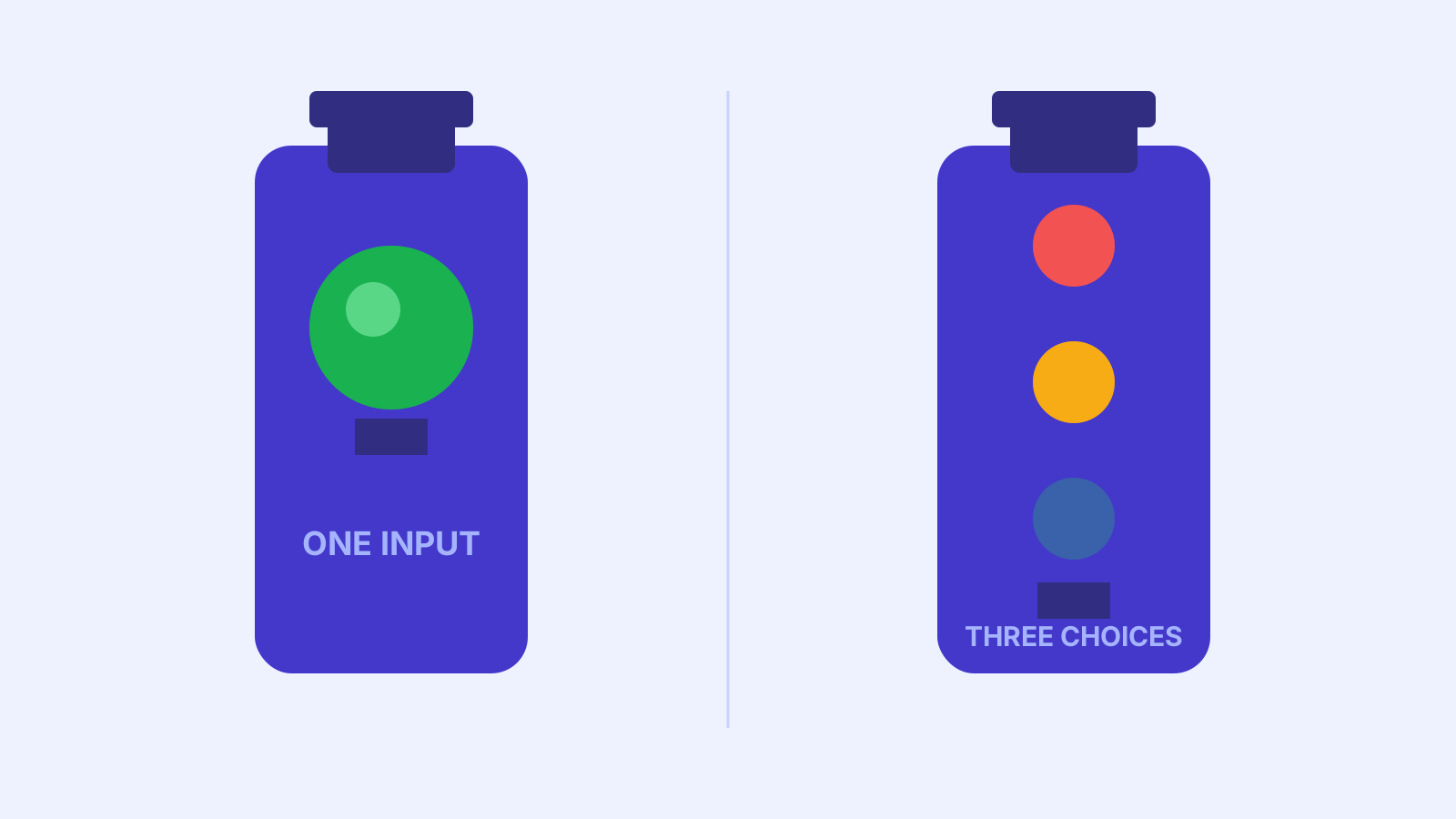
One signal, one button versus many signals, many buttons. The gap between them is not motor speed — it is decision time, and that distinction matters for training.
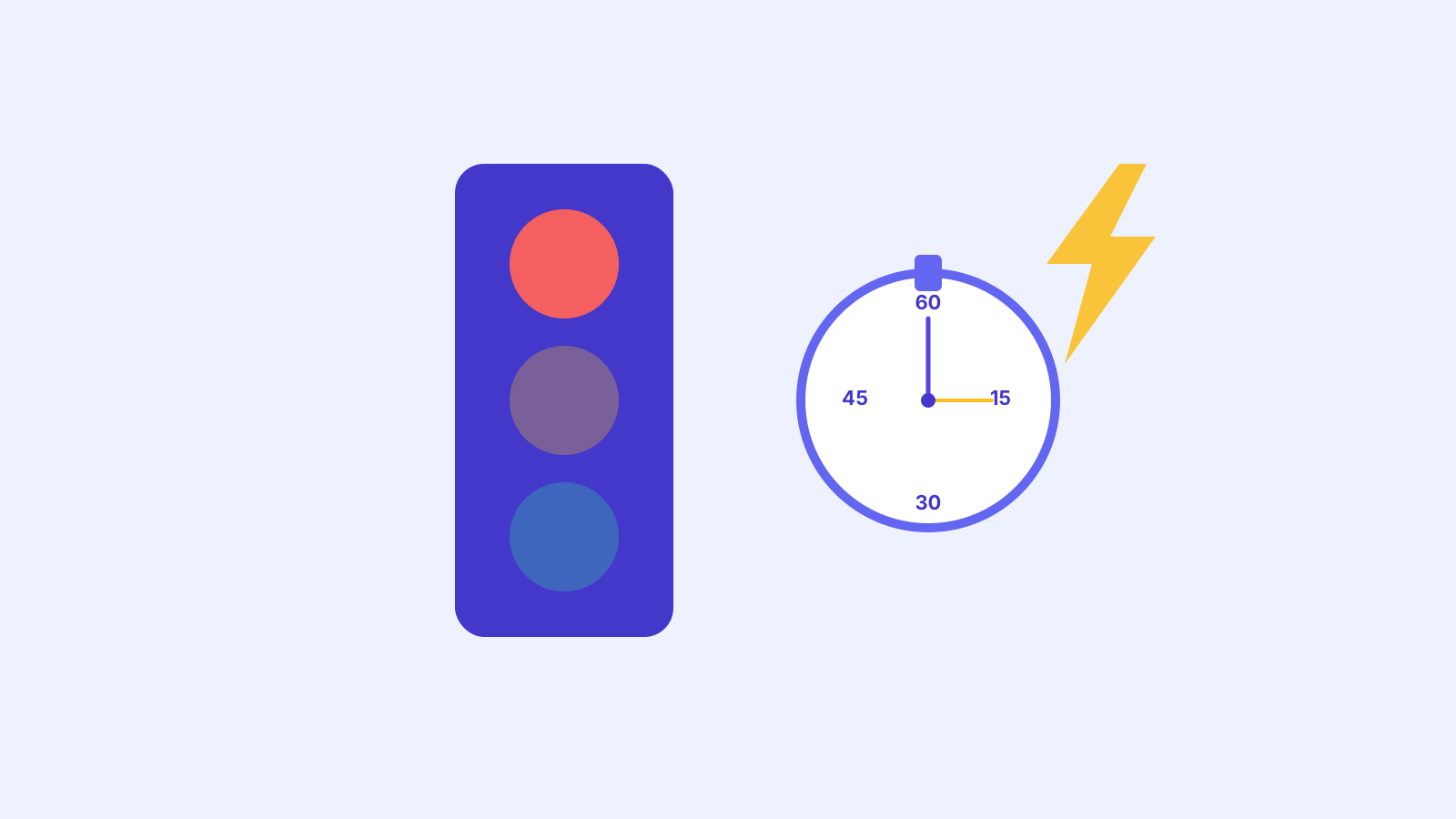
Most online reaction tests measure simple reaction time: one color appears, you hit one button. Real life rarely works like that. A car light ahead could mean brake, the car next to you could swerve, your phone could buzz — multiple possibilities, different responses. That is choice reaction time, and the two numbers are not interchangeable.
The definitions
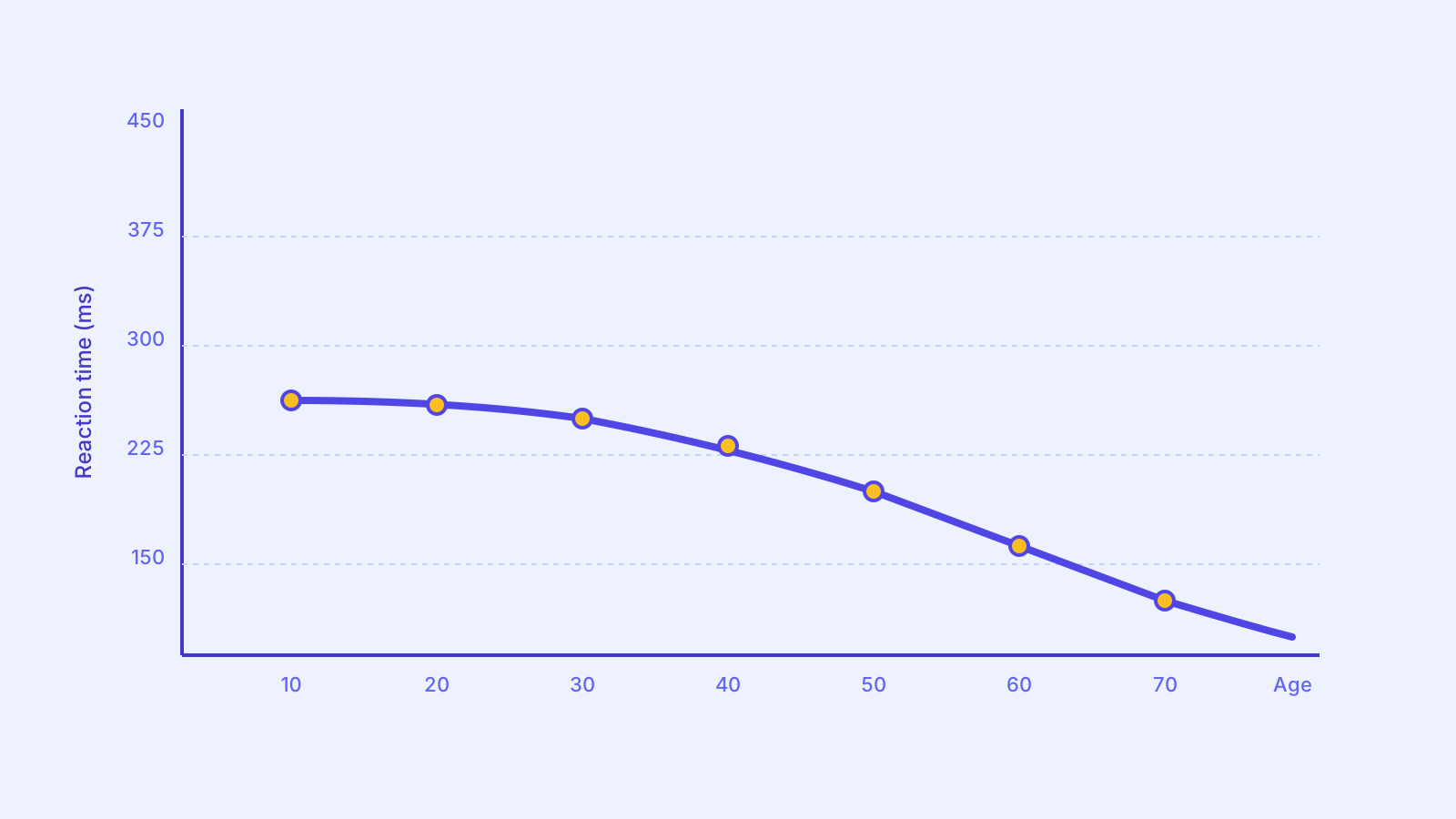
- Simple reaction time (SRT): one possible signal, one possible response. Wait for red, press space. Adult averages sit around 200–250 ms.
- Choice reaction time (CRT): two or more signals, each mapped to a different response. Red → left key, blue → right key. Two-choice CRT averages roughly 350–450 ms.
Where do the extra 150 milliseconds go?
Not into muscle. The motor press takes roughly the same time in both tasks. The extra time is spent identifying the signal, selecting the correct response, and suppressing the wrong one. This is governed by the Hick–Hyman law: decision time rises with the number of choices, roughly logarithmically — going from 1 choice to 2 costs a lot, 2 to 4 costs less, 4 to 8 less still. That is why experienced drivers and athletes do not appear overwhelmed: practice compresses each decision, one chunk at a time.
Why it matters for training
If you only drill SRT, you train the bottom of the chain: detection and execution. Fast, measurable, satisfying — but it leaves the decision layer untouched, which is where most real-world mistakes actually happen. Nobody rear-ends another car because their finger took 240 ms instead of 210 ms. They rear-end because they identified the braking event late, or failed to choose "brake" over "swerve".
How to train both honestly
- Use simple tests for baseline tracking. The number is stable and sensitive to sleep, fatigue and caffeine — a good daily status check.
- Add choice conditions deliberately: our dynamic grids and memory-match games force identify-then-act sequences, which is CRT logic in a different costume.
- Train in noise. Doing drills with distractions around you pushes the decision component harder than any silent, perfect-condition session.
A useful mindset: SRT measures your engine, CRT measures your driving. They correlate loosely, improve separately, and the one you should care about depends on what you are training for — pure reflex esports favor SRT; driving, racket sports and daily life reward CRT. Most people are best served by keeping both honest and not confusing a fast tap with a fast decision.