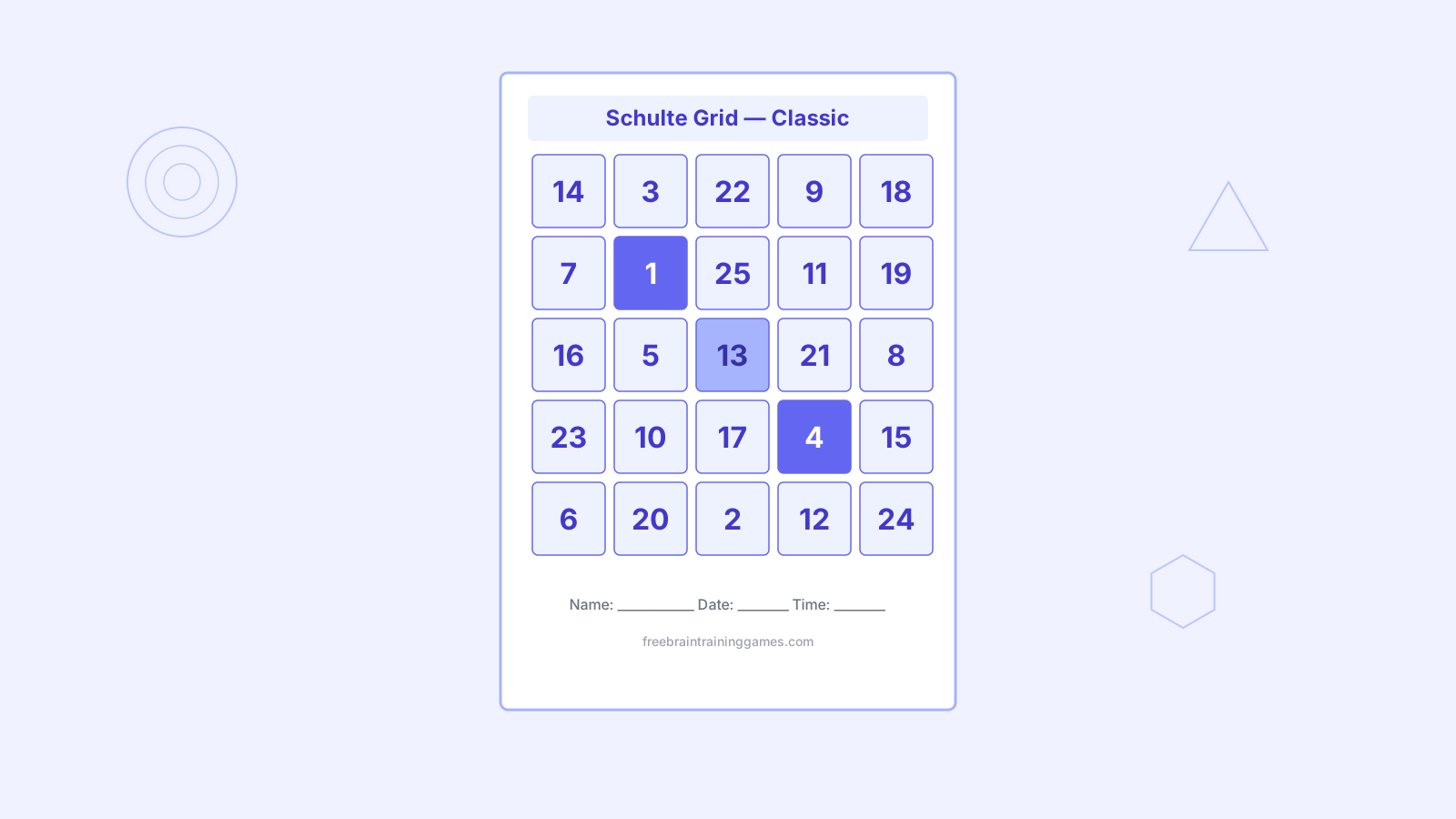
Free Printable Schulte Grids: Classic, Ring, Triangle & Hexagon
Paper Schulte grids are surprisingly hard to find. Here is why offline practice matters, what each grid shape trains differently, and how to print your own A4 sheets for free.
Read article →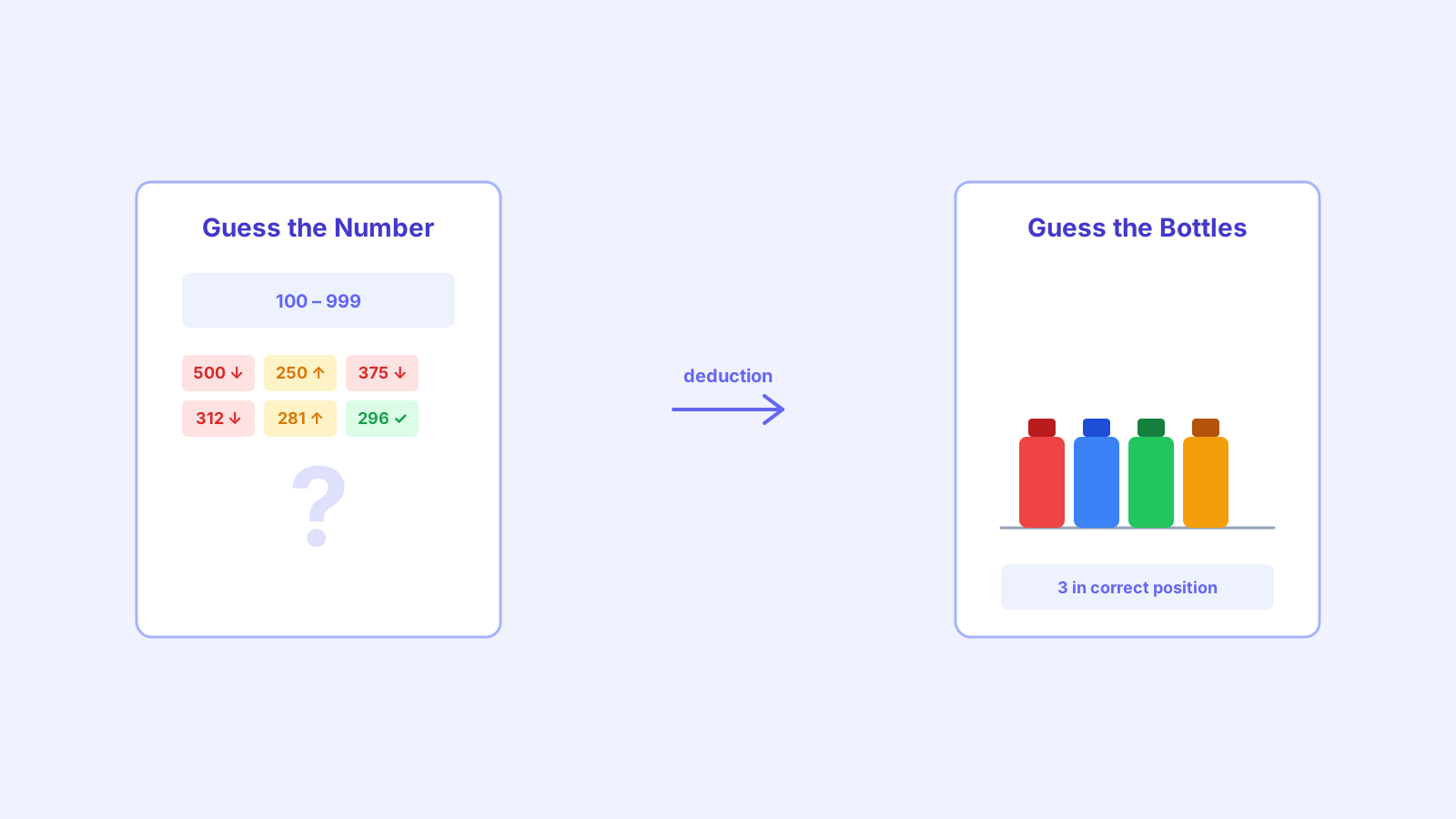
Why Logic Games Like "Guess the Number" and "Bottles" Actually Sharpen Your Mind
Deduction games are not just time-killers. They train working memory, hypothesis testing, and the kind of constrained reasoning that shows up in math, coding, and everyday problem-solving.
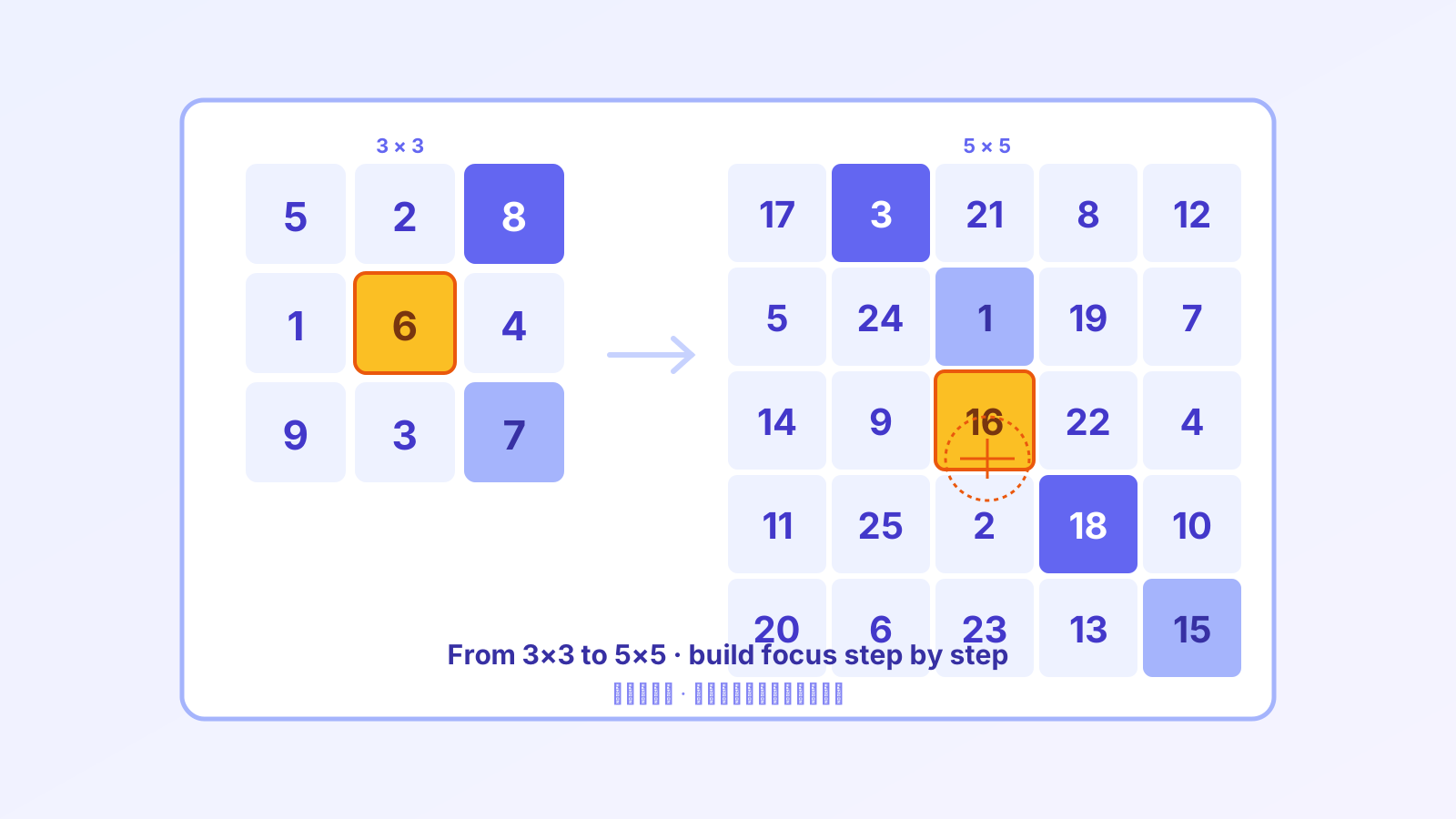
Schulte Grid for Kids: A Parent’s Guide to Building Focus
Your child drags through homework, loses their place while reading, and zones out in class. It is often a breadth-of-attention problem, not laziness. Here is how the Schulte grid works, how to introduce it to a K–2 child, what times to expect, and the mistakes most parents make.
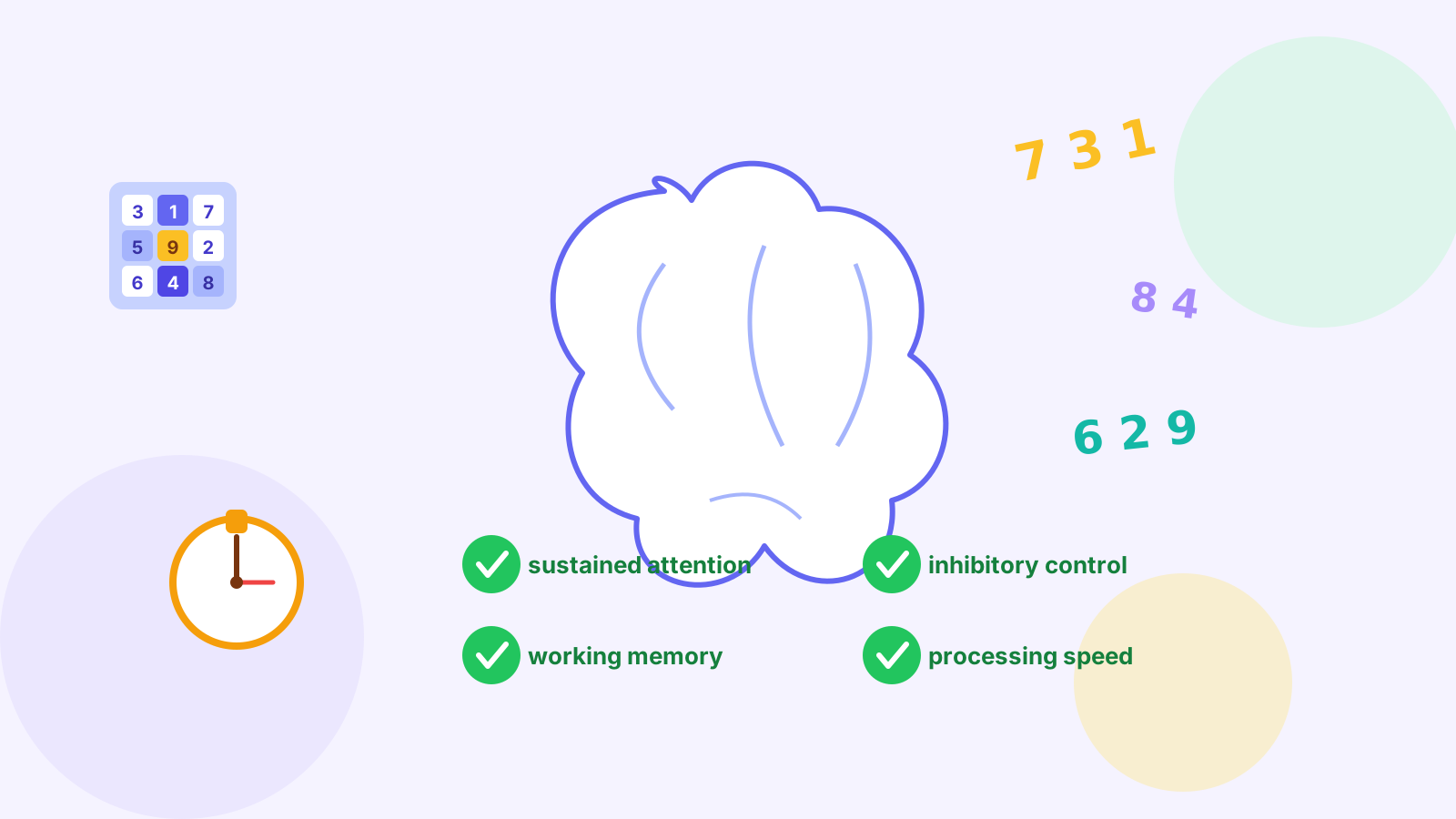
Brain Training Games for Kids with ADHD: What They Can Help With (and What They Cannot)
Brain games do not treat ADHD and cannot replace professional care. But they can give a child low-stakes practice of the exact skills ADHD makes hard — sustained attention, working memory, inhibitory control and processing speed. Here is what the research actually shows, and how to use them responsibly.
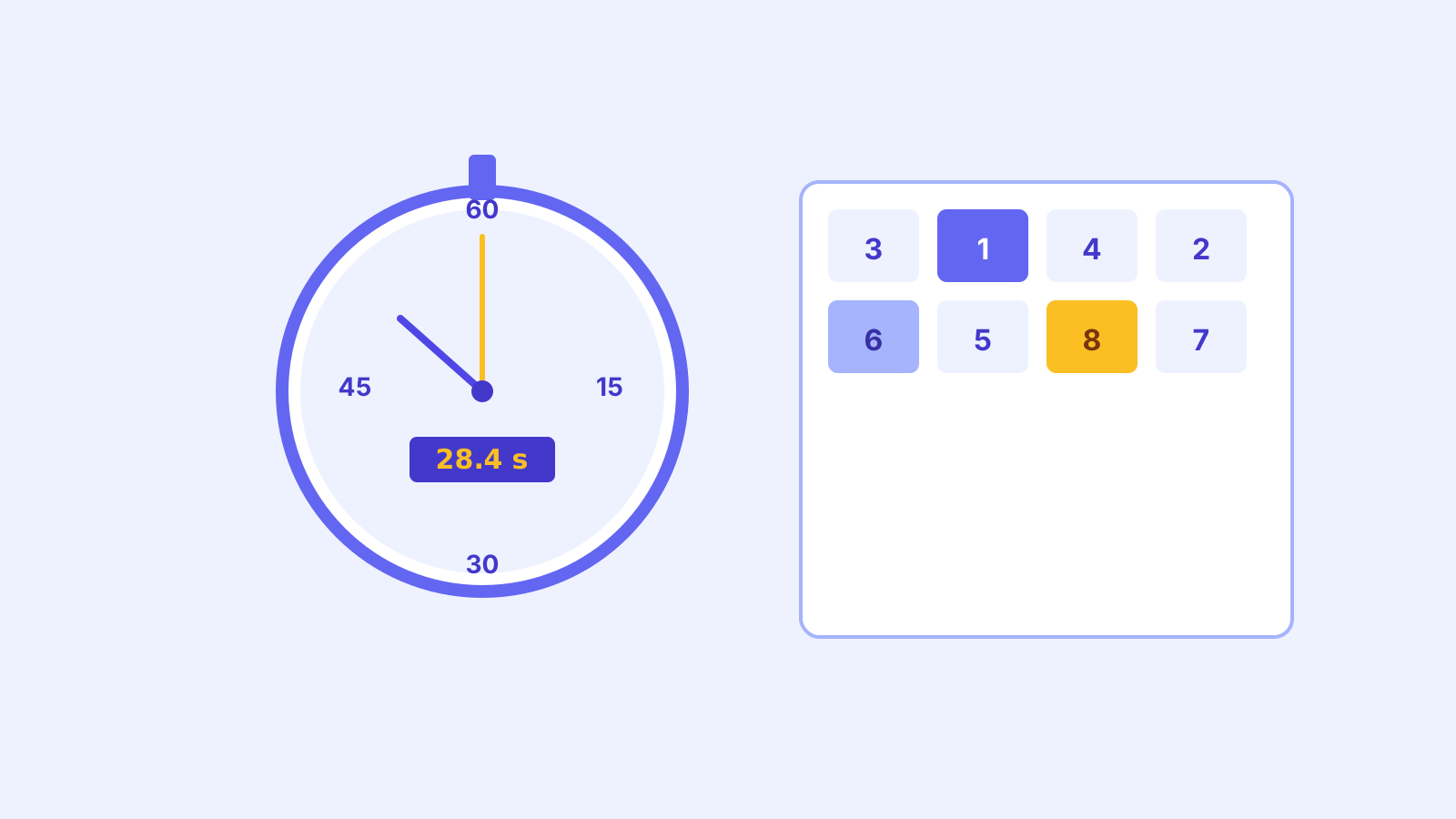
What Is a Good Schulte Grid Time? Realistic Benchmarks
Everyone asks what time they should be hitting. Here are the rough ranges coaches actually use for 5×5, 6×6 and 7×7 — plus why your daily number swings more than you think.
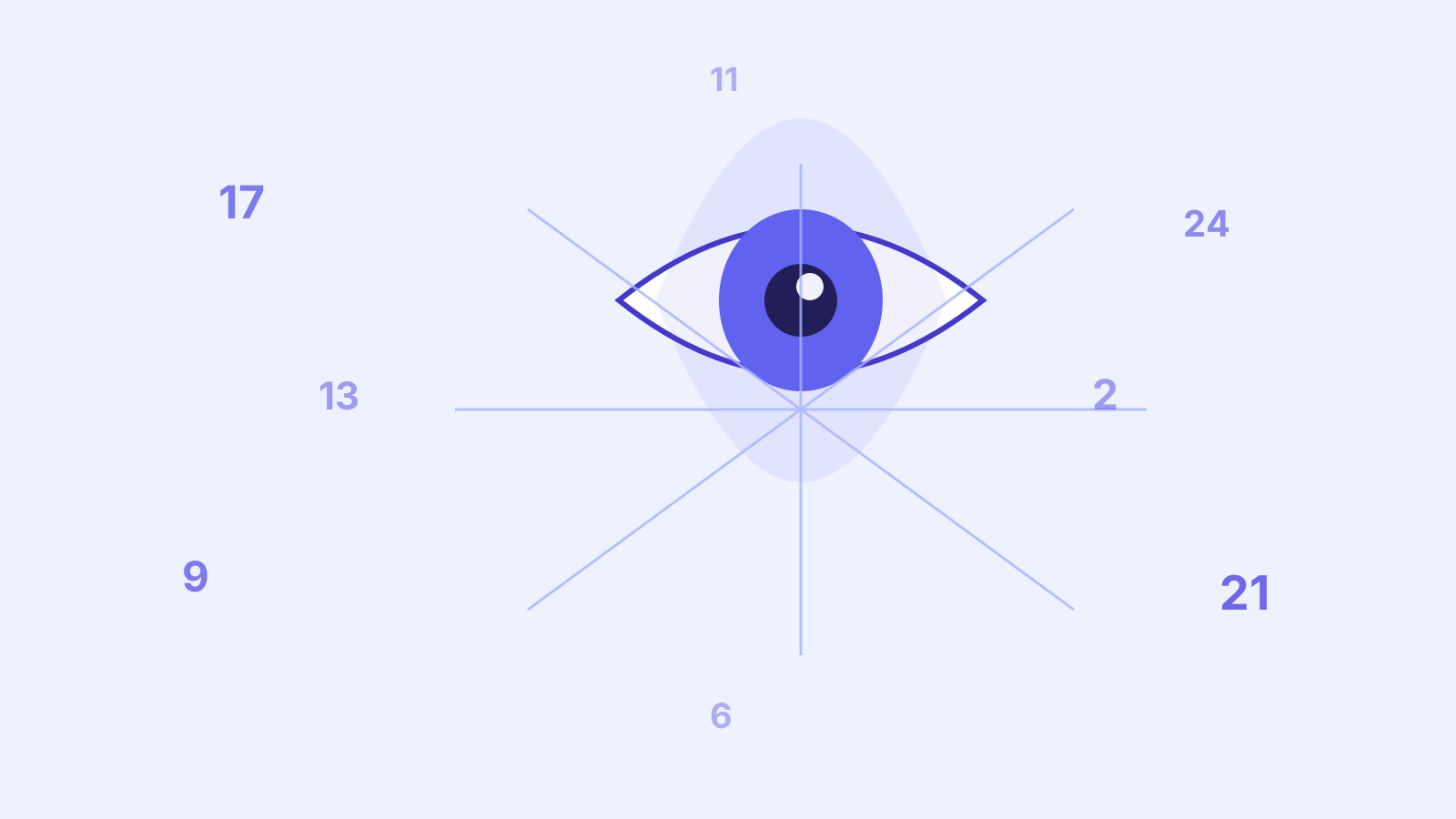
How to Get Faster at the Schulte Grid (Without Cheating Yourself)
Moving your eyes is the tempting shortcut that trains nothing. Here is how to actually get faster: gaze anchoring, systematic scanning, breathing, and the right upgrade schedule.
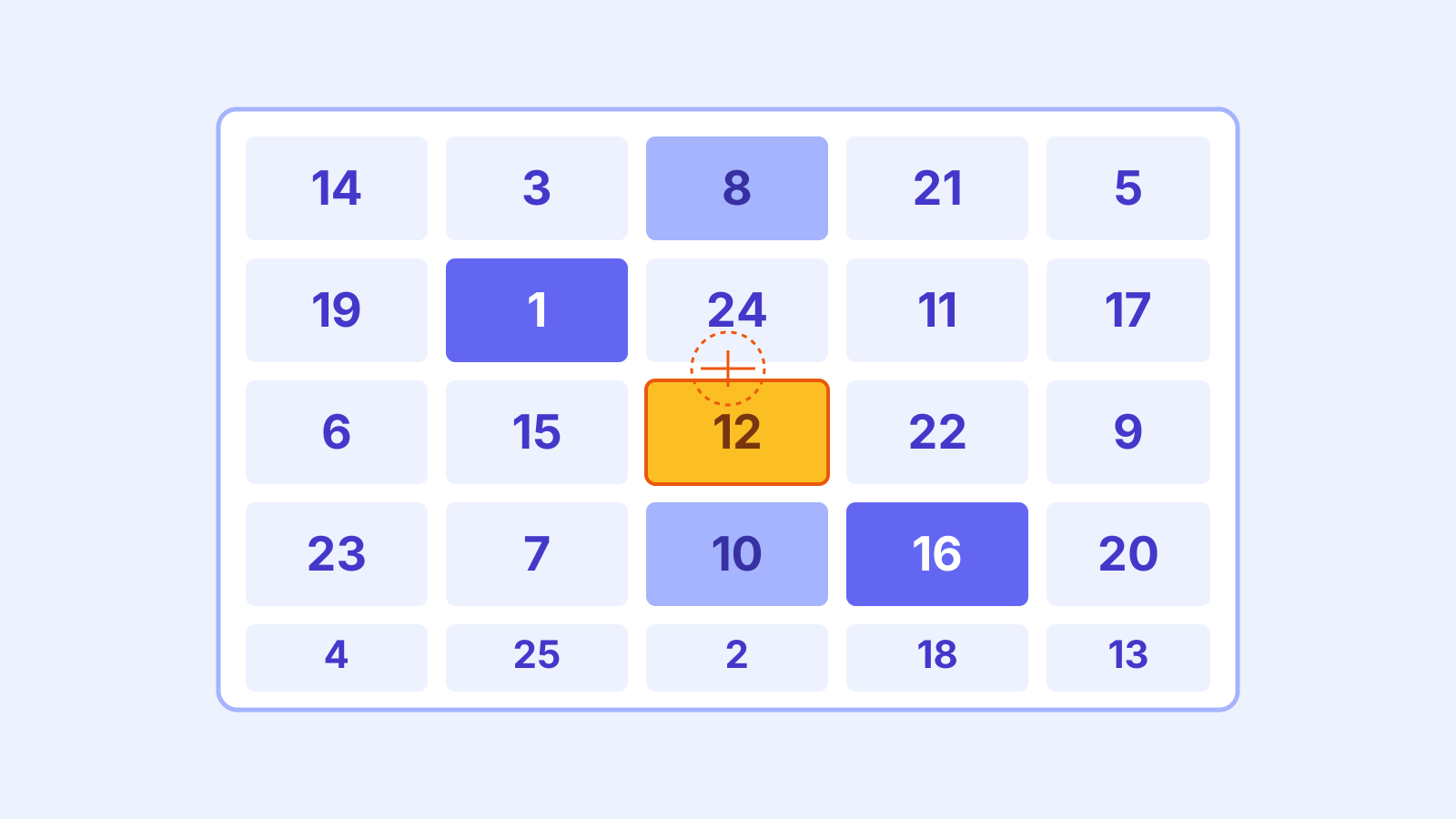
Schulte Grid 5×5: The Complete Guide
The 5×5 is the default for a reason: big enough to demand real scanning, small enough to practice daily. Rules, benchmarks, mistakes, and a four-week plan.
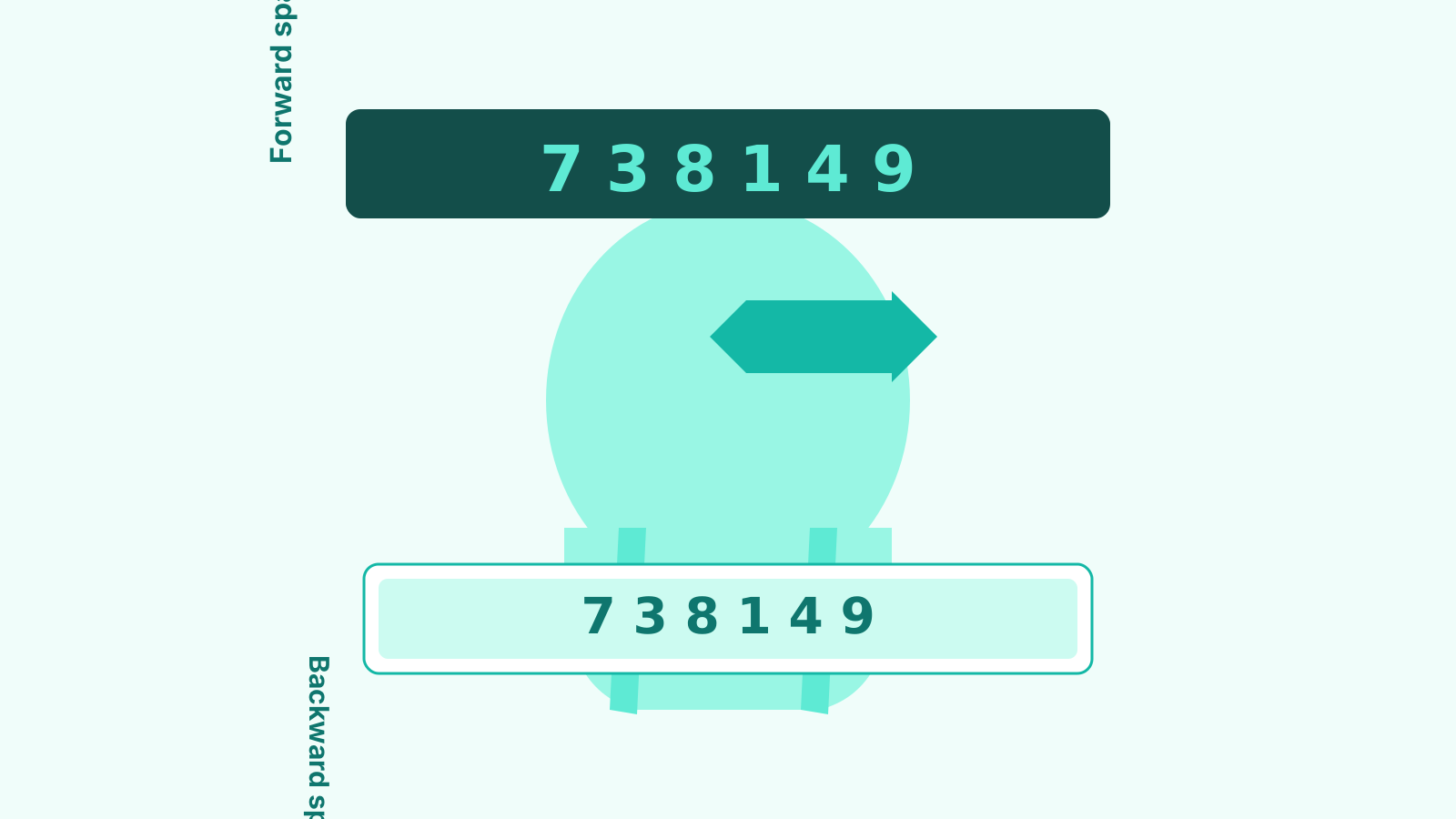
What Is a Digit Span Test? How It Works and What It Measures
Forward span, backward span, and why psychologists have used this simple number-recall task for over a hundred years. Plus what your score does and does not say about you.
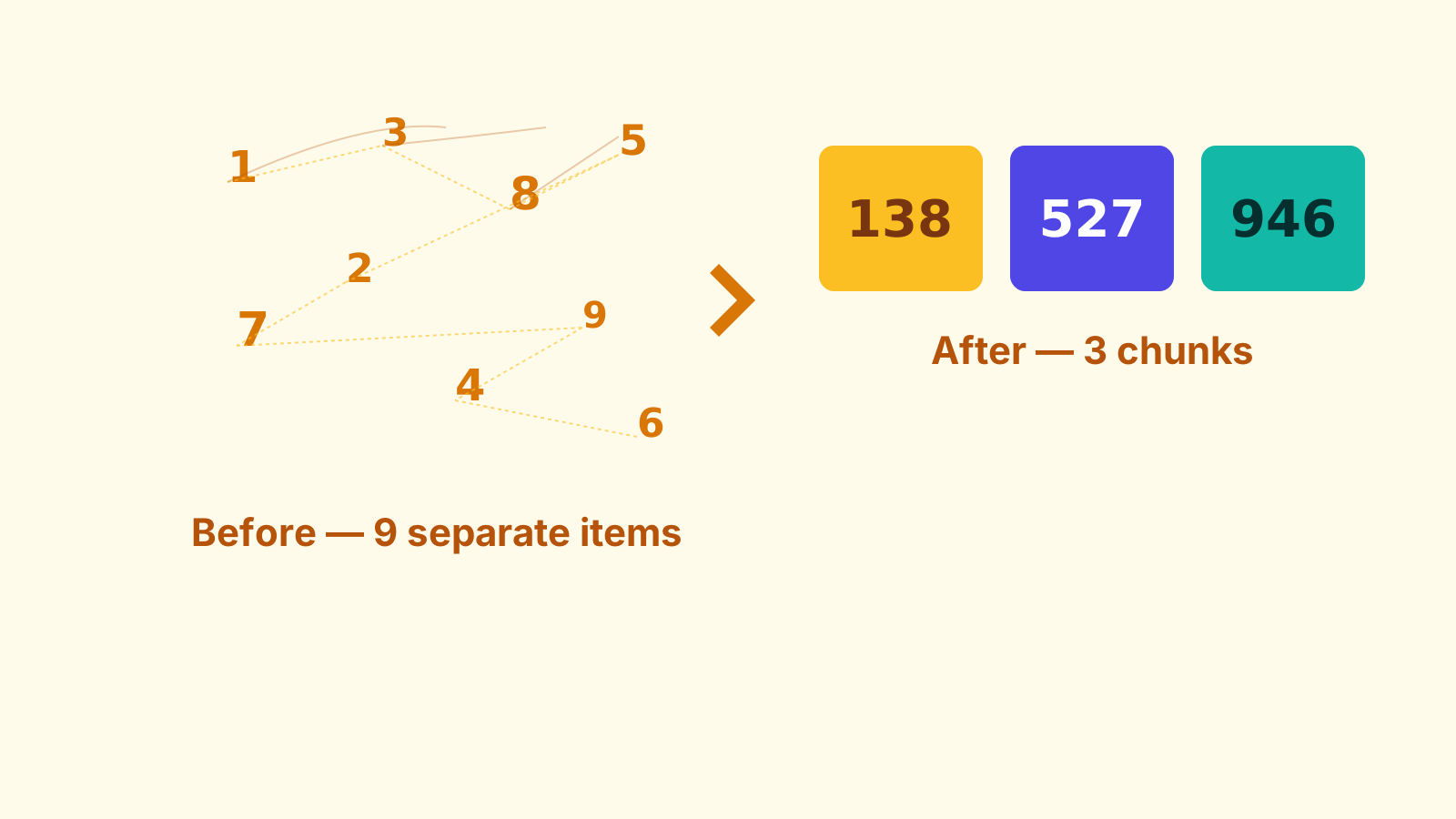
Chunking: How to Remember Longer Number Sequences Instantly
Your short-term memory holds about 7 items — but an item can be a chunk. How grouping turns 1385729 into one thing, and how far the technique actually scales.
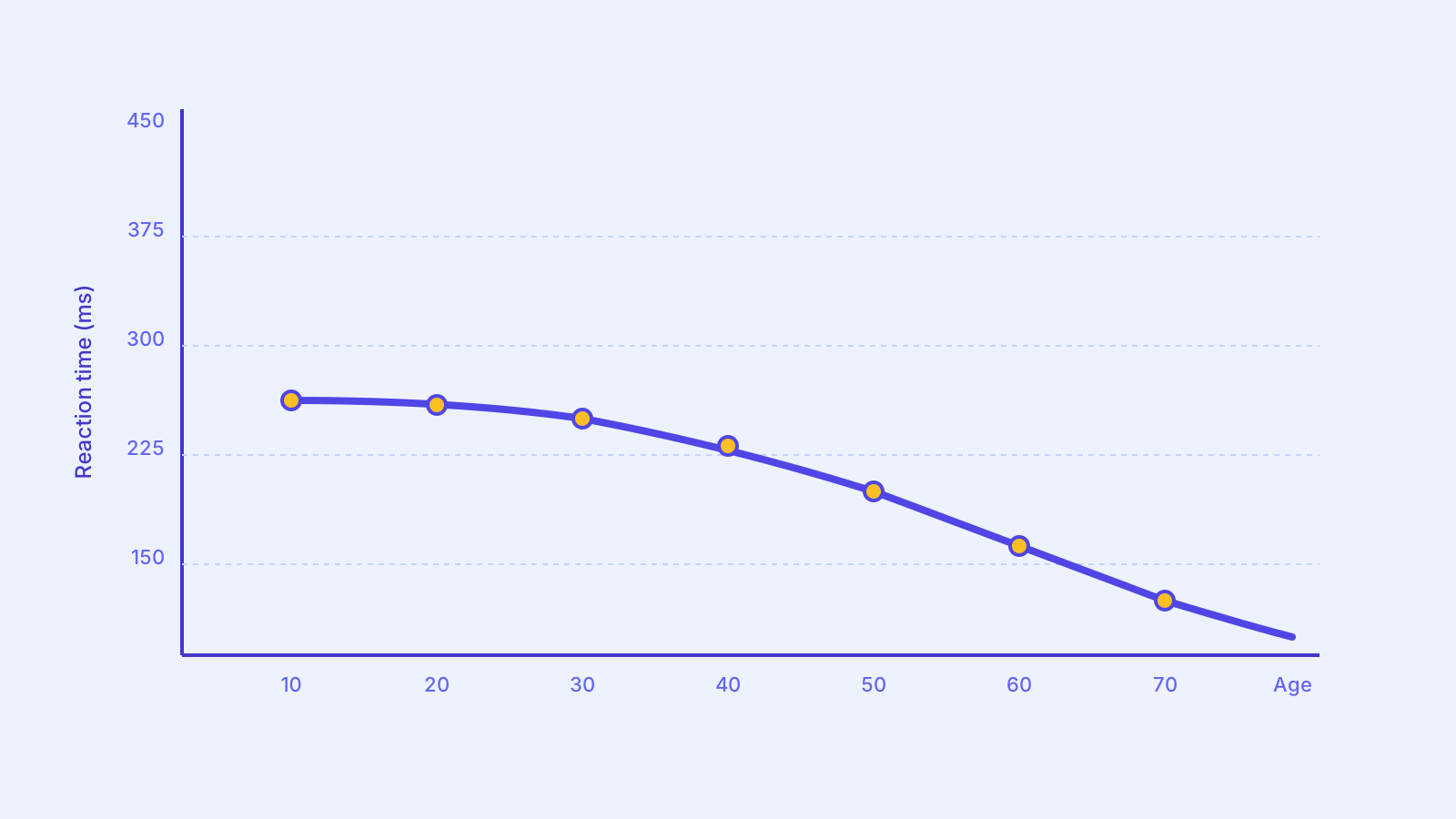
Average Reaction Time by Age: What the Data Actually Shows
Reaction time creeps up across adulthood — slowly at first, faster later. Realistic ranges by age, why the curve bends, and what stays trainable at 50+.
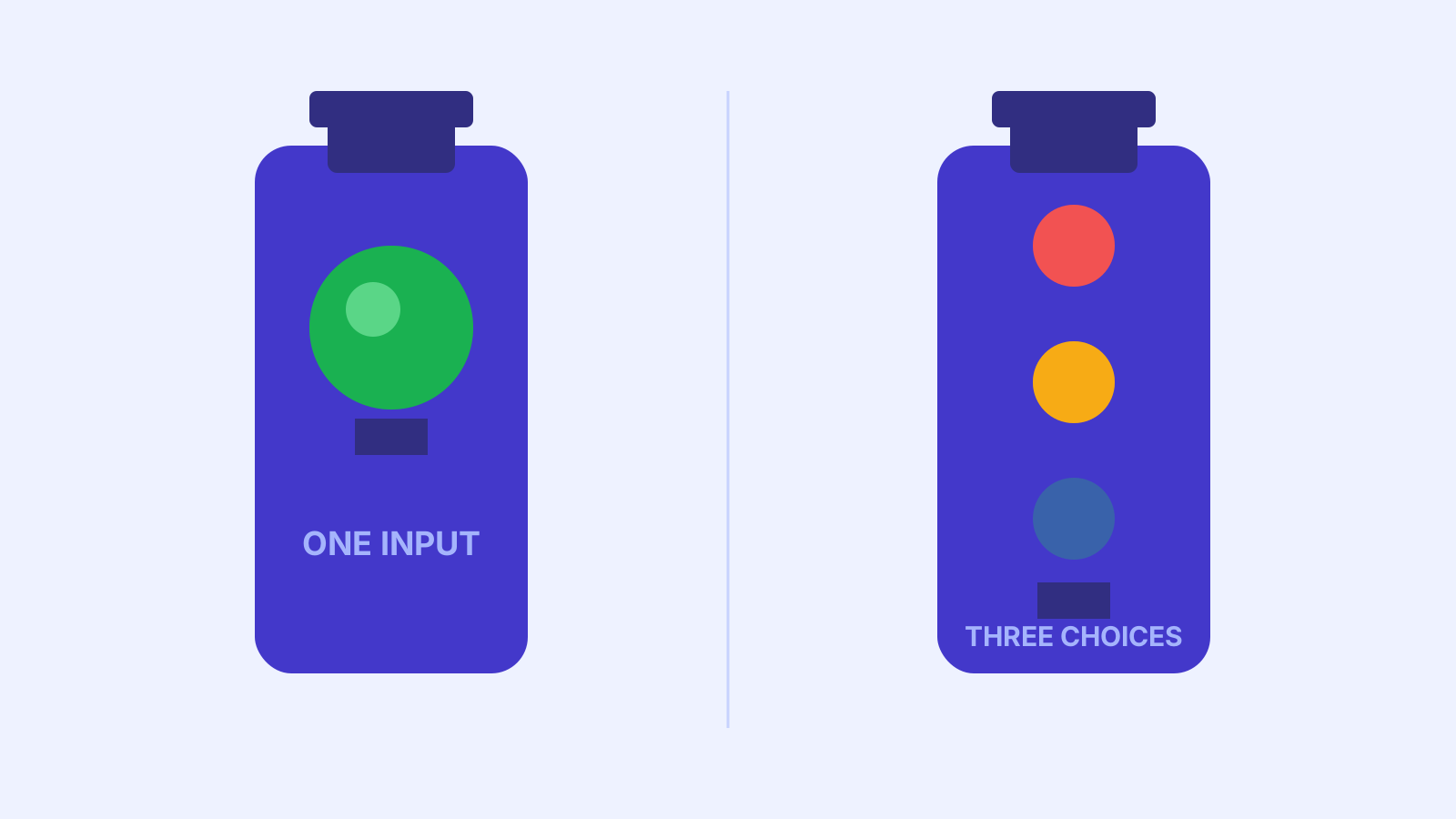
Simple vs Choice Reaction Time: Why They Feel Completely Different
One signal, one button versus many signals, many buttons. The gap between them is not motor speed — it is decision time, and that distinction matters for training.
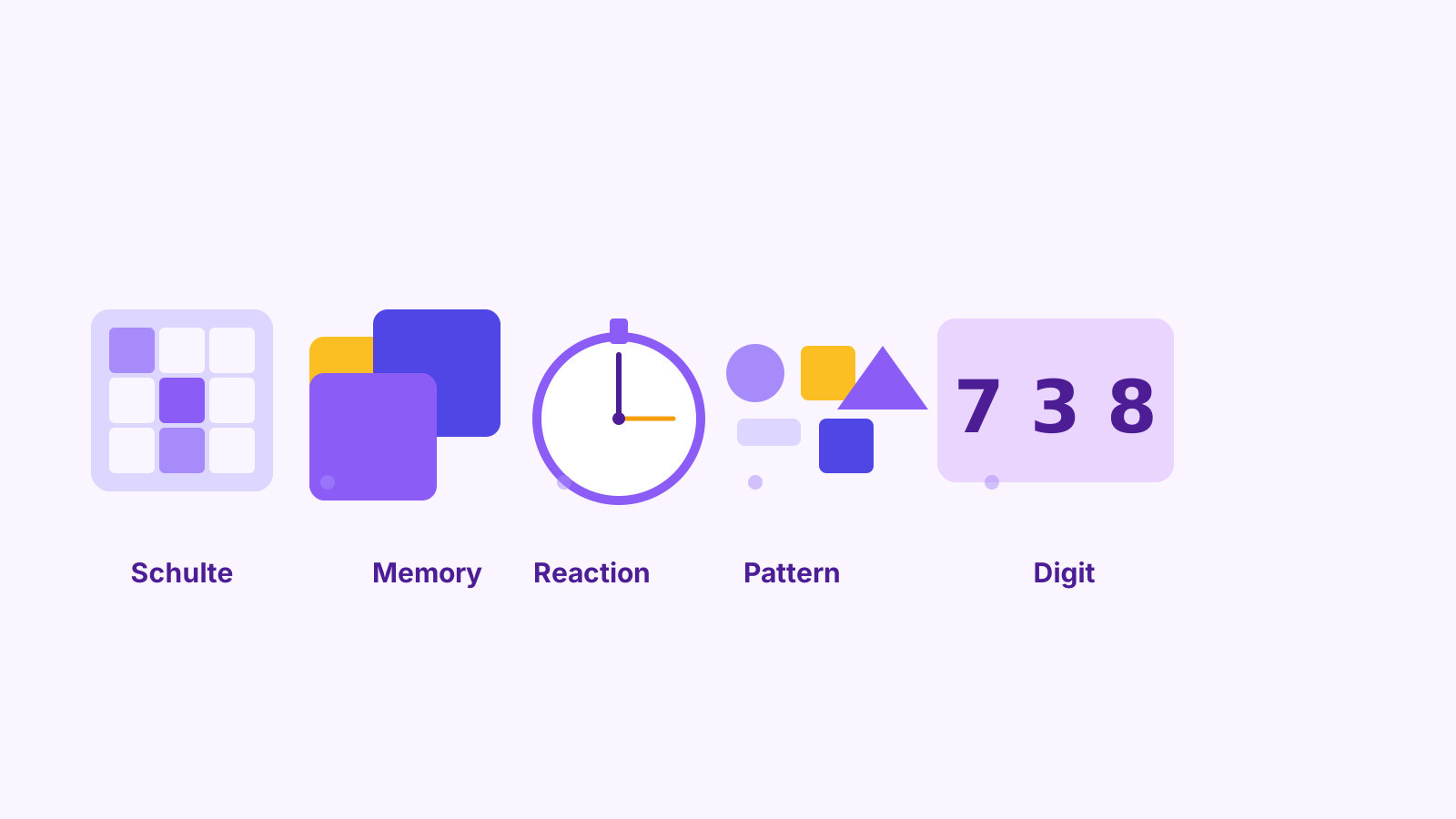
The Main Types of Free Brain Training Games, Explained
Schulte grids, memory games, reaction tests, pattern games and number games train different systems. Here is an objective map of each type — what it builds, what it does not, and who it fits.
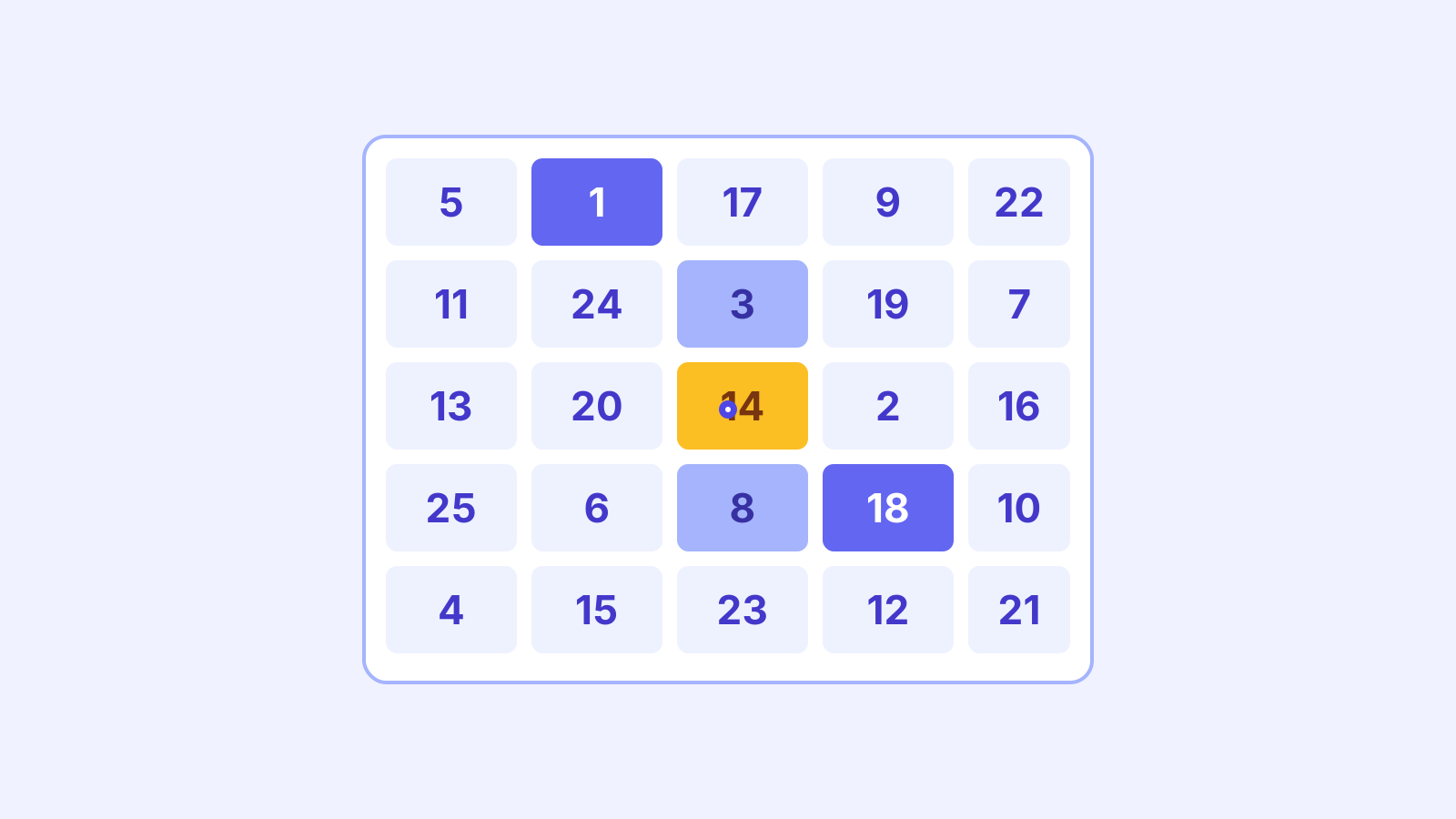
What Is a Schulte Grid? A Complete Beginner’s Guide
The Schulte grid is one of the simplest tools for training attention and peripheral vision. Here is how it works, why athletes and pilots use it, and how to practice correctly.
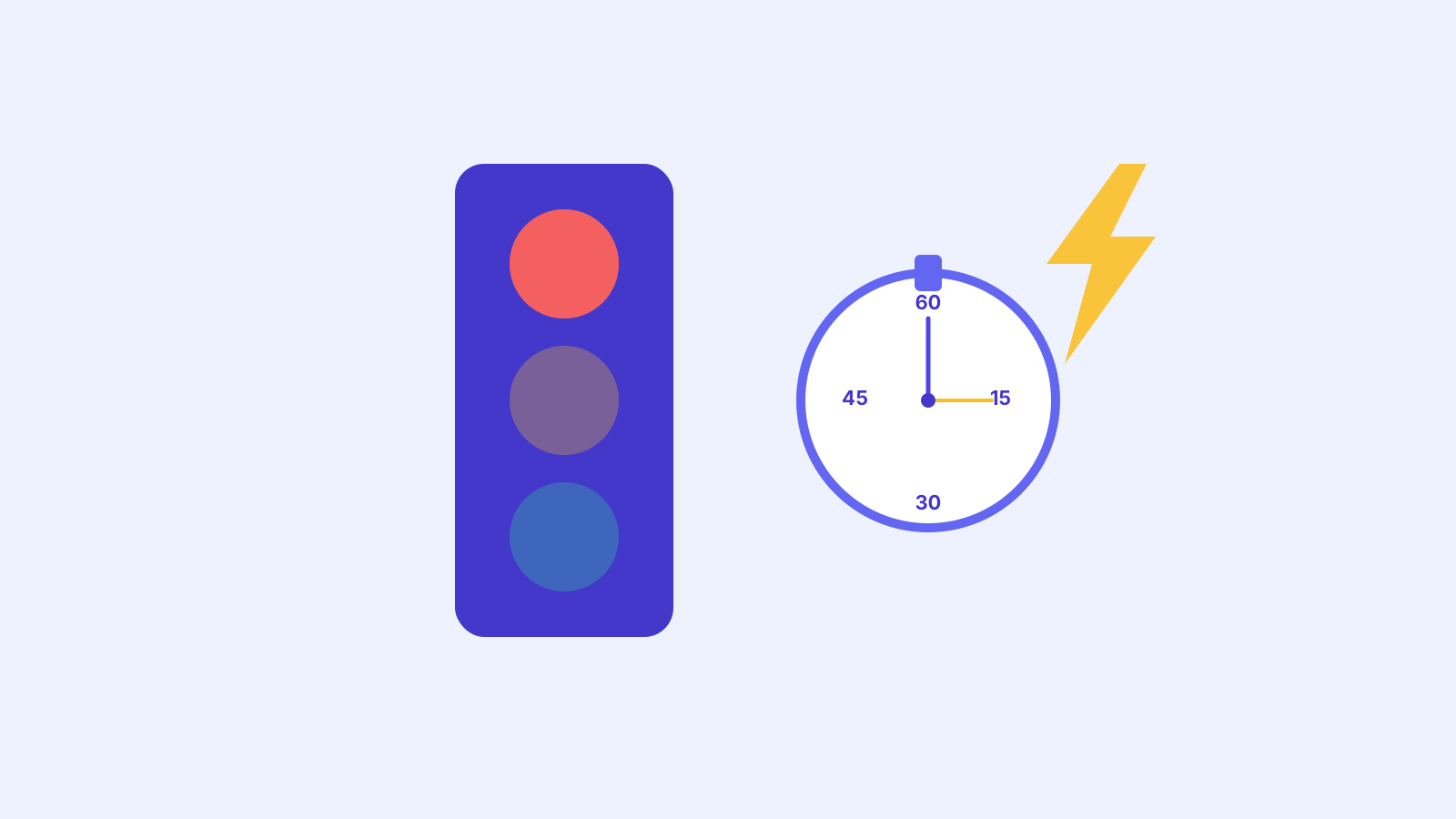
Average Reaction Time by Age (and How to Improve Yours)
What is a "good" reaction time? Most adults score 200–250 ms on a simple light test. Learn what affects it and four evidence-based ways to get faster.

Why You Can Only Remember 7 Digits (and How to Remember More)
Miller’s "magical number seven" explains why our memory game starts at 6 digits. A practical look at how chunking and the memory palace help you get more out of the same short-term memory capacity.
A Daily Focus Routine Built Around 5-Minute Brain Games
You do not need 90 minutes of meditation. A short, timed ritual of attention games before deep work is a practical way to shift your brain into gear for the session that follows.

Do Brain Training Games Actually Work? What the Research Says
The famous "transfer problem": getting better at a game is easy — getting better at life is harder. A balanced reading of the evidence.
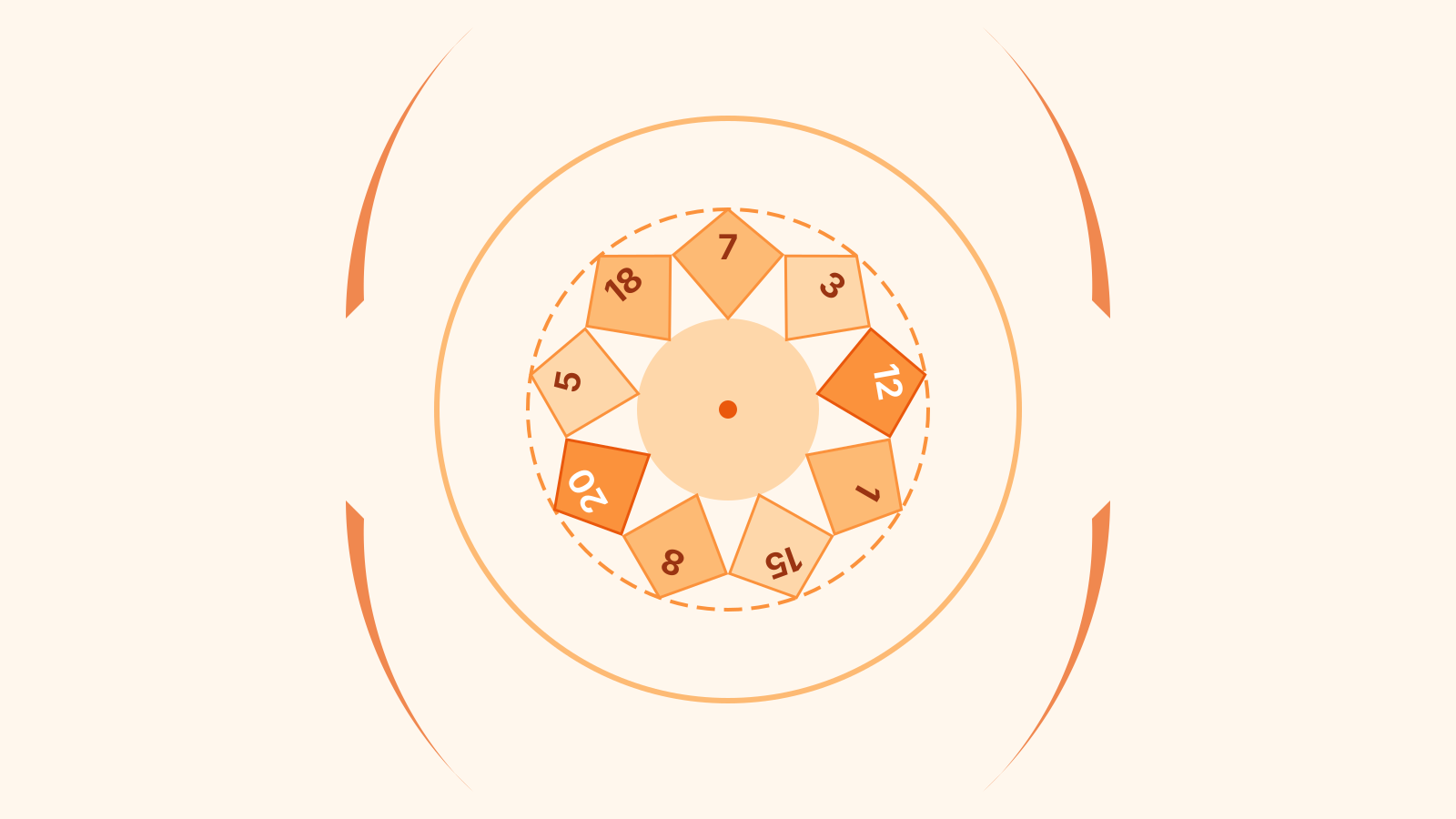
Dynamic Mode Is Hard on Purpose: 5 Tips to Survive Moving Numbers
When every correct click reshuffles the remaining numbers, pattern memory becomes useless and pure attention takes over. Here is how to adapt.
Practice what you just read
Every guide pairs with a free 2-minute game. No sign-up required.