Free Printable Schulte Grids: Classic, Ring, Triangle & Hexagon
Paper Schulte grids are surprisingly hard to find. Here is why offline practice matters, what each grid shape trains differently, and how to print your own A4 sheets for free.
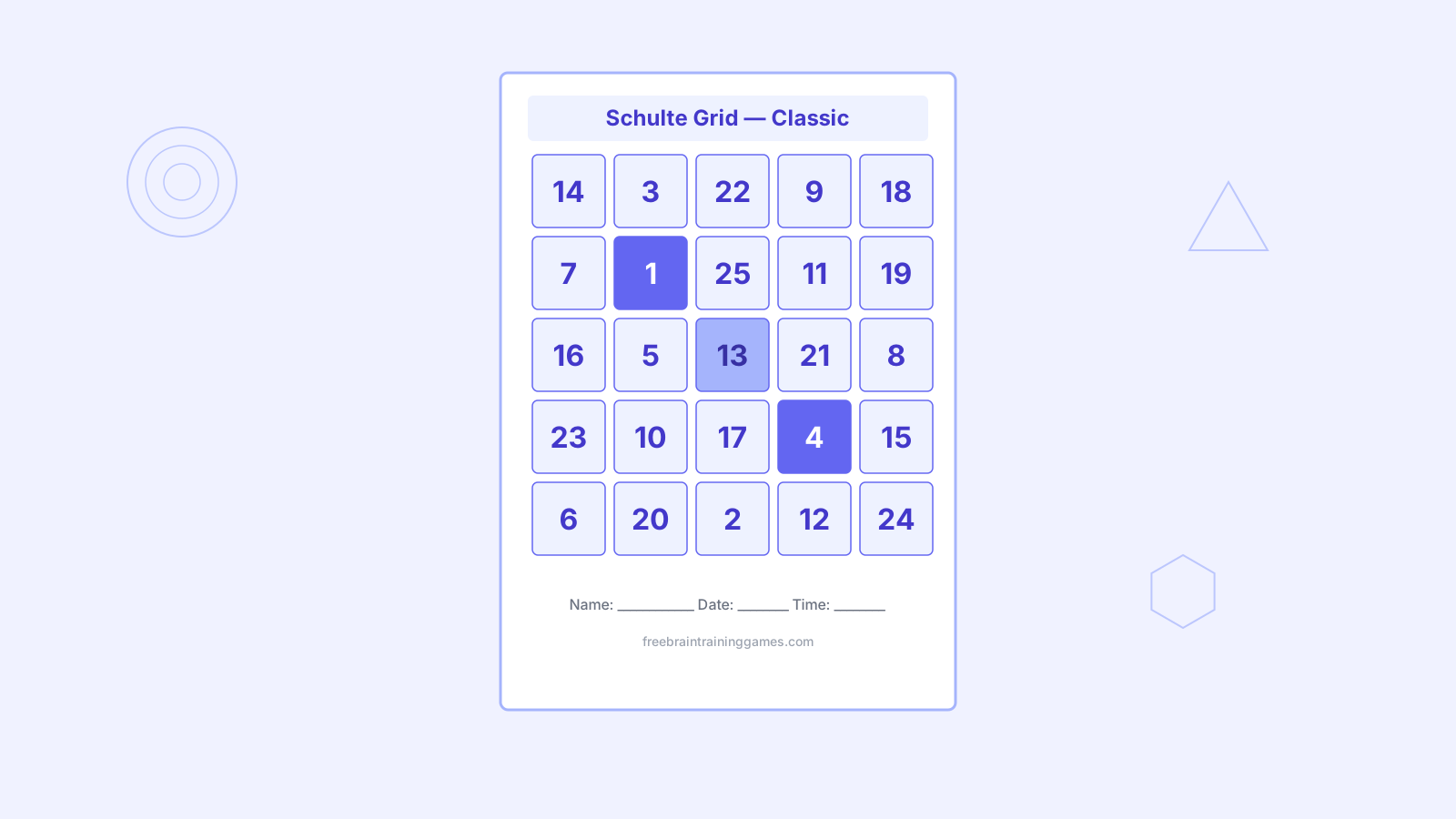
You can buy laminated Schulte grid cards online, but they cost money, they ship slowly, and they are always the same boring 5×5. The truth is that a plain sheet of paper and a pen work just as well — and in some ways better. You can write the numbers in any order, crumple it up, and start fresh. The only problem is making the grid itself: drawing 25 boxes by hand is tedious, and most "printable" PDFs online are low-resolution scans with numbers that are already in order.
That is why we built a free Schulte grid printer. It generates fresh, randomized grids in four shapes — classic, ring, triangle, and hexagon — and exports them as clean A4 PDFs you can print at home, at school, or at the office. No sign-up, no watermark, no paywall. Every time you click "shuffle," you get a new number order, so the sheet never gets stale.
Why practice on paper at all?
Screen training is convenient, but paper has three real advantages:
- No notifications. A phone or laptop is one swipe away from a distraction. A printed sheet is not.
- Fine motor engagement. Circling a number with a pen is a different motor pattern than tapping a screen. For children still developing handwriting, that extra physical feedback helps memory.
- Tangible progress. A stack of completed sheets with dates and times written on them is a visible record of effort. You can literally hold your improvement in your hand.
Teachers and therapists have known this for years. A printed grid on a clipboard is a tool you can use in a waiting room, on a plane, or in a classroom where screens are banned. It is also easier on the eyes for children who already spend too much time looking at tablets.
What each shape trains differently
The classic square is the standard, but it is not the only option. Each layout changes the visual search problem slightly:
- Classic square — the baseline. Trains systematic scanning and peripheral vision in a uniform field.
- Ring — numbers arranged in concentric circles. Forces your eyes to rotate around a center point, which is closer to how you scan a dashboard or a sports field.
- Triangle — a pyramid of numbers. Trains your brain to handle non-uniform spacing and to widen its search pattern as the rows get longer.
- Hexagon — a honeycomb. The irregular adjacency between cells makes the search less predictable, which keeps the task from becoming too automatic.
If you have been doing 5×5 for months and your time has stopped improving, switching shapes is one of the best ways to break a plateau. The brain has to relearn the spatial layout, and that relearning is itself attention training.
How to use the printable sheets
Print one sheet per session. Write your name and the date at the top. Start the timer, find the numbers in order, and stop the timer when you finish. Write the time on the sheet. That is it.
- Keep the sheets in a folder. Once a week, flip through them. You will see the trend.
- Do not reuse the same sheet twice in a row — you will memorize the number positions and stop training search.
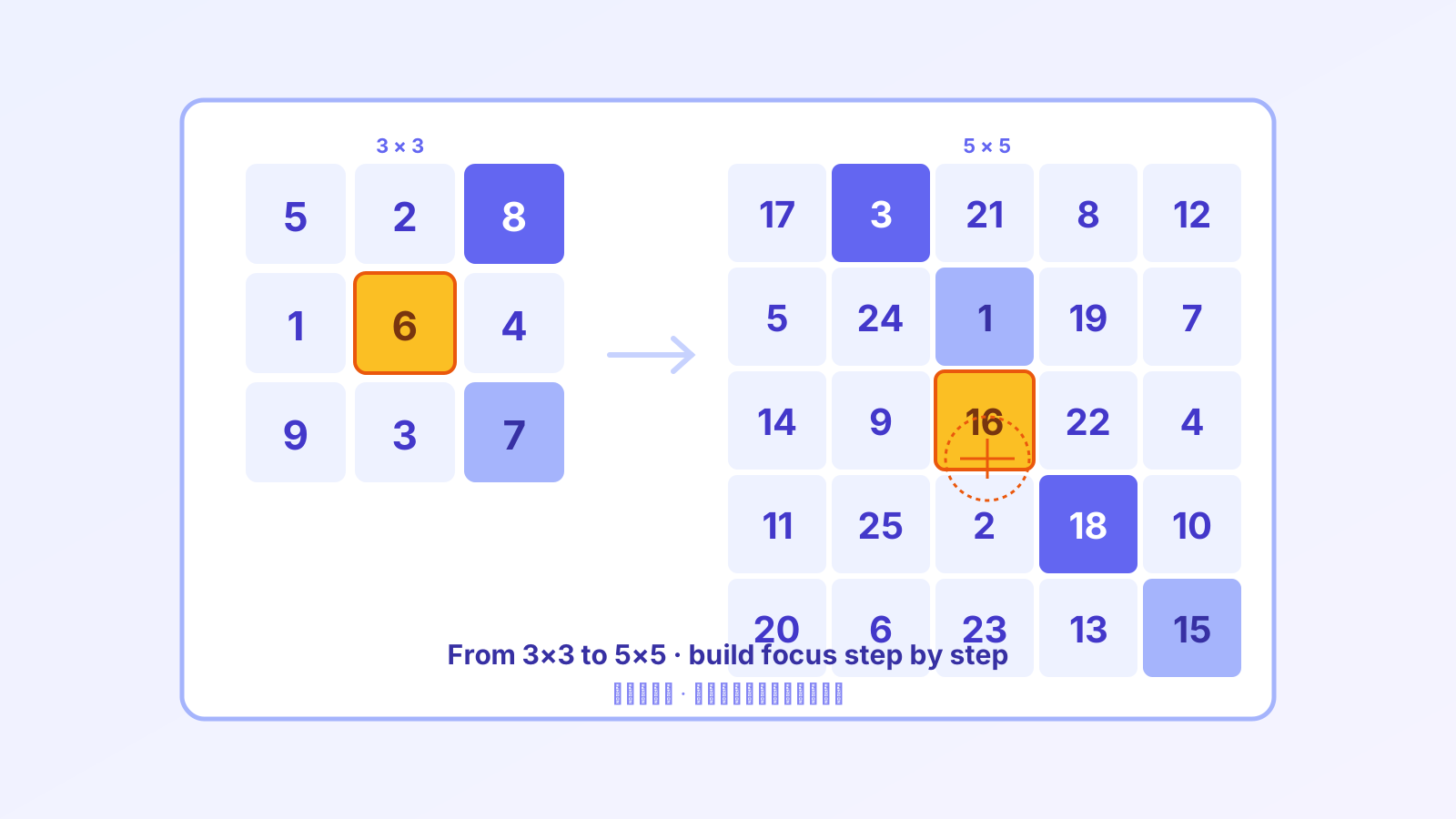
- For children, use the smaller grids (3×3 or 12 cells) and make it a game: "Can you beat your time from yesterday?"
The PDF is A4 by default because that is the most common paper size worldwide. If you are in the US and use Letter paper, the grid will still print fine — just tell your printer to fit to page. The important thing is that the numbers are large, the lines are crisp, and the sheet is ready to use in under a minute.
The bottom line
A Schulte grid is a tool, not a toy. It does not need to be expensive, digital, or complicated. It needs to be available, fresh, and easy to use. Print a stack, keep them on your desk, and do one round a day. That is the whole program.