What Is a Good Schulte Grid Time? Realistic Benchmarks
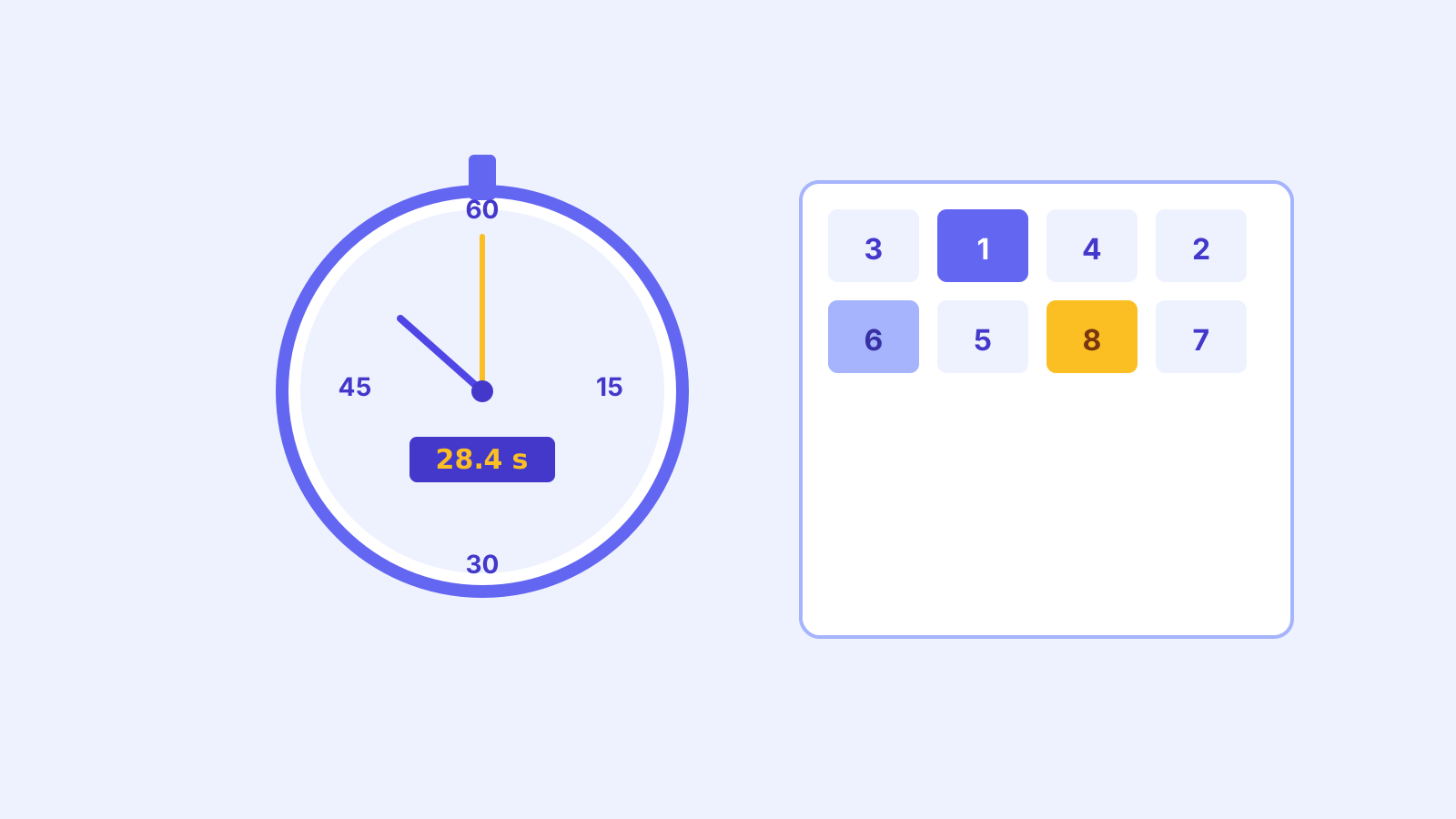
Everyone asks what time they should be hitting. Here are the rough ranges coaches actually use for 5×5, 6×6 and 7×7 — plus why your daily number swings more than you think.
There is no official Schulte grid federation and no certified world record. Anyone selling you a precise "national average" table is making numbers up. What does exist is a loose set of ranges that attention coaches, vision trainers and sports psychologists have converged on over decades of watching people do the drill.
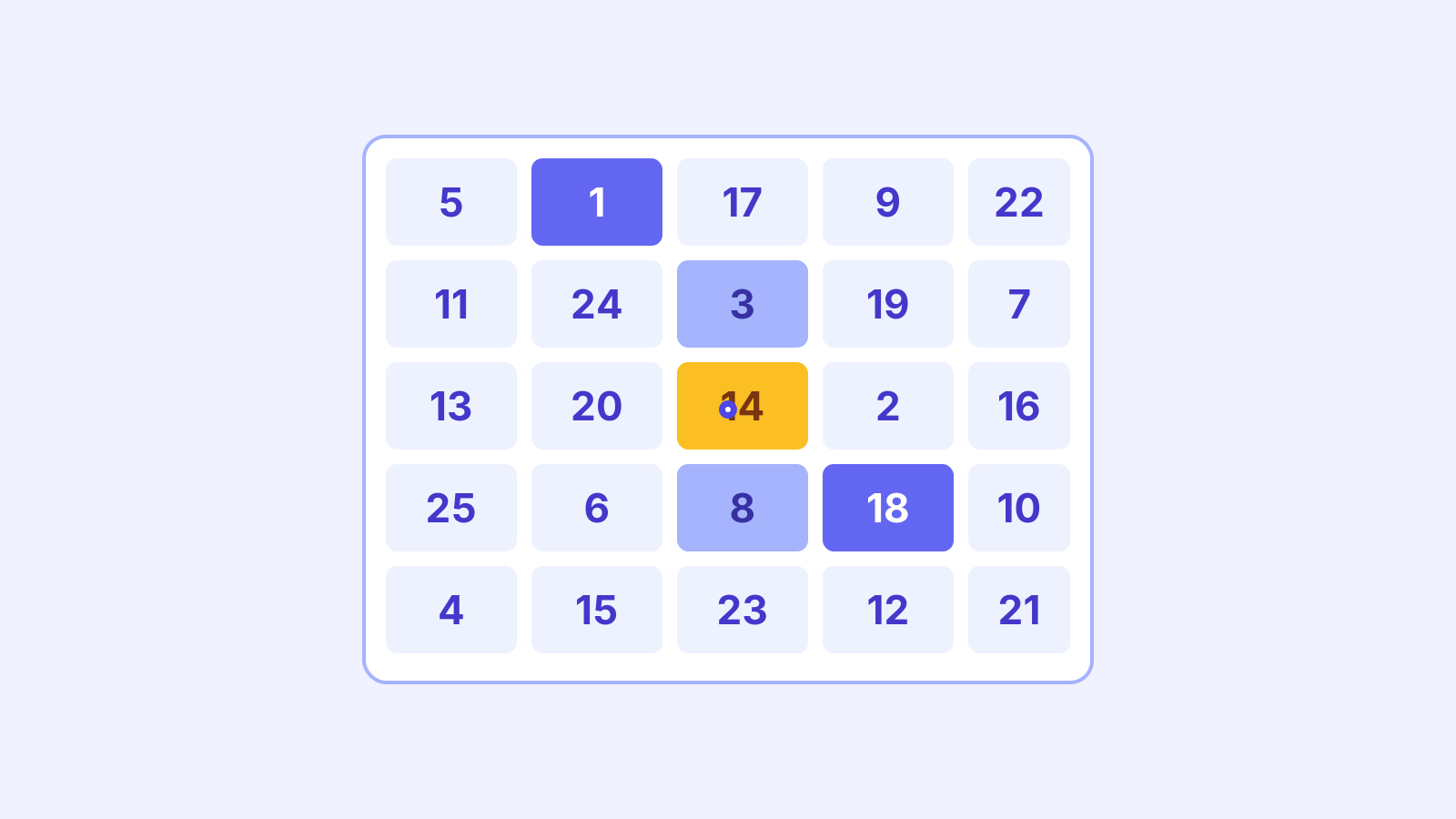
5×5 grid (numbers 1–25)
- 45–60 seconds: first-timer range. Normal. Your eyes are still chasing every number.
- 30–45 seconds: a couple of weeks of casual practice. You are starting to use peripheral vision.
- 20–30 seconds: solid trained level. Most people who stick with it settle here.
- 15–20 seconds: advanced. This is roughly where athlete and pilot trainees operate.
- Under 15 seconds: elite. People at this level almost always train daily and have done so for months.
Notice the gap between "beginner" and "trained" is huge, and the gap between "trained" and "elite" is small. That shape is typical for attention tasks: the first 50% improvement comes easy, the last 10% takes real work. Do not judge yourself against the under-15 crowd until you have logged at least a month of consistent rounds.
6×6 and 7×7
Bigger grids do not scale linearly. Going 5×5 → 6×6 adds 11 more targets (25 → 36) and roughly doubles the visual area your peripheral vision must cover. A trained 25-second 5×5 player often starts at 55–70 seconds on 6×6. A respectable 6×6 time after practice is 35–50 seconds; 7×7 (49 numbers) in under 70–90 seconds is genuinely good.
The number you should care about more than time
Your single-round time is noisy. Sleep, screen brightness, caffeine and mood can swing it by 10–20% or more. A much better signal is your best-of-ten average over a week. When I review training logs, I ignore the single best number completely. One good round tells you nothing about capacity; ten rounds tell you about consistency — and consistency is what attention actually is.
- Track a 10-round session at least twice a week.
- Compare week-to-week medians, not day-to-day bests.
- If your times stall for three weeks, change grid size or shape — plateaus often hide in over-familiarity.
One more thing: speed without the center-of-gaze rule is meaningless. If you are whipping your eyes around to find numbers, a 20-second round trains eye movement, not attention. A slow 35-second round with gaze locked center is the better workout. Keep that in mind before you chase the leaderboard.