How to Get Faster at the Schulte Grid (Without Cheating Yourself)
Moving your eyes is the tempting shortcut that trains nothing. Here is how to actually get faster: gaze anchoring, systematic scanning, breathing, and the right upgrade schedule.
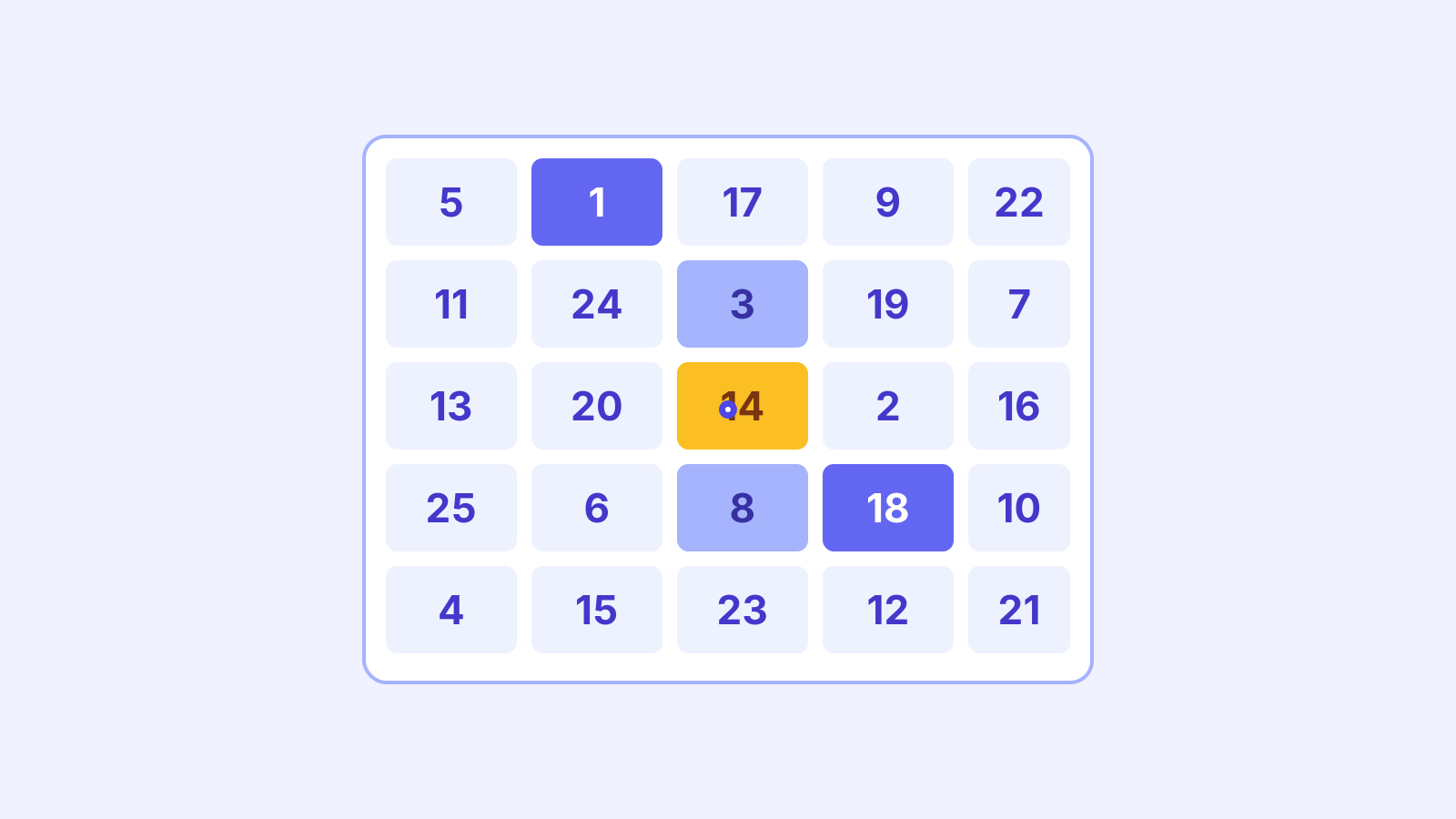
When people first want a faster Schulte time, they do the same thing: move their eyes more. It works for about a week — times drop — and then stalls, because eyeball speed was never the bottleneck. Attention was. Below is the approach I have seen work across roughly three groups of people: myself, a handful of regular users I compared logs with, and the coaching literature on visual search.
1. Anchor your gaze, every single round
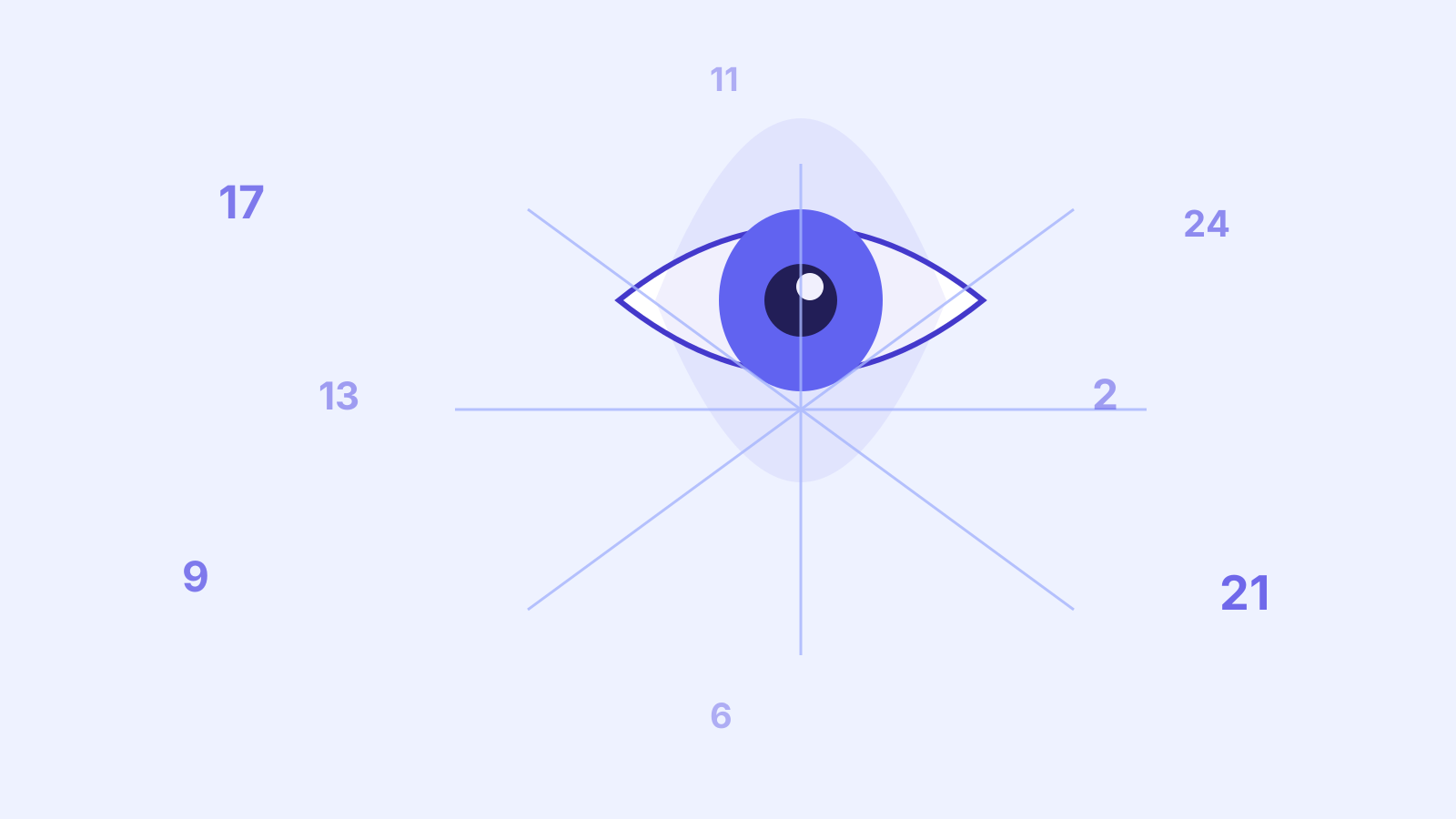
Pick a spot in the center of the grid and decide your pupils do not leave it. When you "find" a number, resist the reflex to look directly at it before clicking. Use your mouse or finger to confirm while reading the number peripherally. For the first week this feels clumsy and your times get worse. That is the cost of rewiring the habit. It passes.
2. Scan systematically, not randomly
Random staring is what beginners do. Pick one scanning strategy and run it for a whole session:
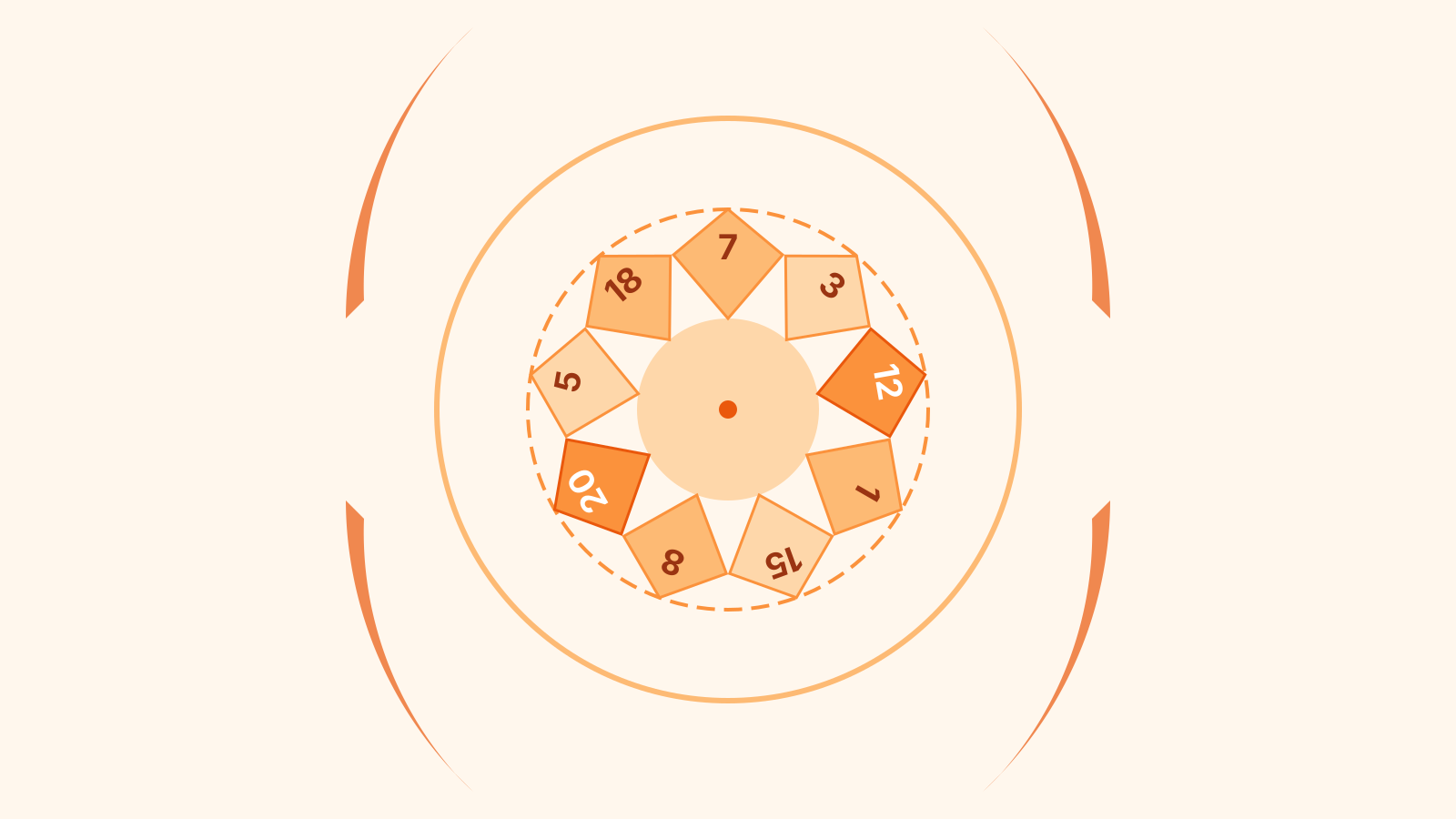
- Spiral: sweep the outer ring, then the next ring in, toward the center.
- Zones: divide the grid mentally into four quadrants and clear each in turn.
- Next-neighbor: after clicking n, search the area nearest where n+1 is statistically likely to be — nowhere, since layouts are random. This one teaches you to abandon false assumptions fast.
Switch strategies between sessions rather than within them. The goal is not to find a magic pattern — the grid is shuffled, there is none — but to replace panic-scanning with controlled scanning.
3. Slow your breathing, on purpose
Almost everyone holds their breath during the last five numbers. Heart rate ticks up, peripheral field narrows (this is a real physiological response — tunnel vision under arousal), and you miss targets sitting in plain sight. Breathe out slowly as you click. It sounds like meditation advice because attention and arousal share the same control knob.
4. Use a warm-up ladder
Do not start a session cold on your hardest grid. Spend one round on 3×3 or an easy shape, then 5×5, then your working difficulty. Reaction and visual-search performance both peak after a short ramp-up; the first round of the day is almost always slower than round three. You can spot the pattern in almost any training log once you look.
5. Upgrade sizes on a schedule, not on ego
Stay on 5×5 until you can do ten rounds under 30 seconds in one session. Then move to 6×6 and accept that your times will look terrible for a week. Dropping back to 5×5 to "win" resets the adaptation. The same rule applies to shapes — circle and triangle grids are not side quests, they are cross-training that breaks your rectangle-specific habits.
None of this is glamorous. The honest summary: fix your gaze, search on purpose, breathe, warm up, and increase difficulty on schedule. People who improve are not the ones with faster eyes; they are the ones who tolerate feeling slow while the attention system catches up.