Schulte Grid for Kids: A Parent’s Guide to Building Focus
Your child drags through homework, loses their place while reading, and zones out in class. It is often a breadth-of-attention problem, not laziness. Here is how the Schulte grid works, how to introduce it to a K–2 child, what times to expect, and the mistakes most parents make.
If you have a child in early elementary — Kindergarten through 2nd grade — you have probably watched a fifteen-minute reading log turn into a forty-minute struggle, or seen their eyes slide off the page halfway through a sentence. Before you call it laziness or a willpower problem, consider the more likely explanation: their breadth of attention is still developing. The Schulte grid is one of the simplest tools around for training exactly that, and this guide is for parents who want to use it well — not as a magic pill, but as a small, consistent daily habit.
What the Schulte grid actually is
The Schulte grid is a square filled with randomly placed numbers. The task is to find them in order, from 1 upward, as fast as you can. It was originally developed for pilot selection and training, because flying demands fast visual scanning and the ability to split attention across a wide field. For children, the appeal is simpler: it is short, it gives an immediate score, and the rules take thirty seconds to explain.
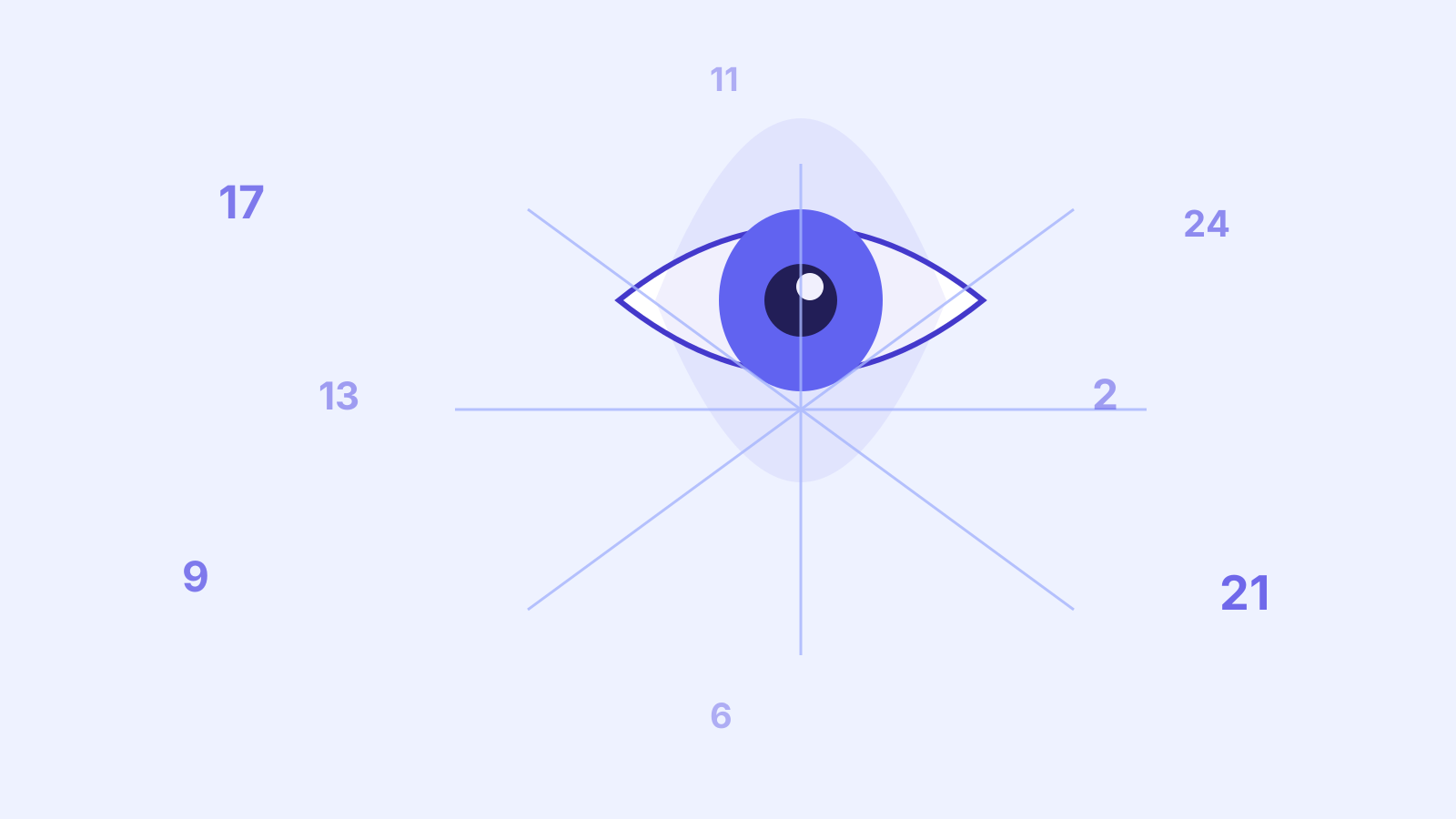
The key rule that makes it work as attention training — not just an eye-exercise — is to keep your gaze locked on the center of the grid and find the numbers with peripheral vision. If your eyes are darting to every cell, you are practicing eye movement, not attention breadth. The point is to make the brain process a wider visual field without moving the eyes.
Why it helps with homework, reading and math
- Visual span. Many early readers skip words or lose their place because their eyes can only take in one or two words at a time. The grid trains the brain to capture a wider area in a single glance, which is exactly what fluent reading needs.
- Processing speed. Every round is a loop of see the number, recognize it, move to the next. Repeat that loop a few hundred times and the signal gets faster — the same speed that helps a child keep up with a teacher writing on the board.
- Attention distribution. While looking for 5, a child’s peripheral vision may already register 12 and 18. That quiet ability to hold several possibilities in mind is what makes multi-step math problems and longer reading passages manageable.
None of this turns a distracted child into a focused one overnight. What it does is give a child repeated, low-pressure practice with the very skill the school day demands constantly: holding attention on one task while filtering out everything else.
How to introduce it to a K–2 child
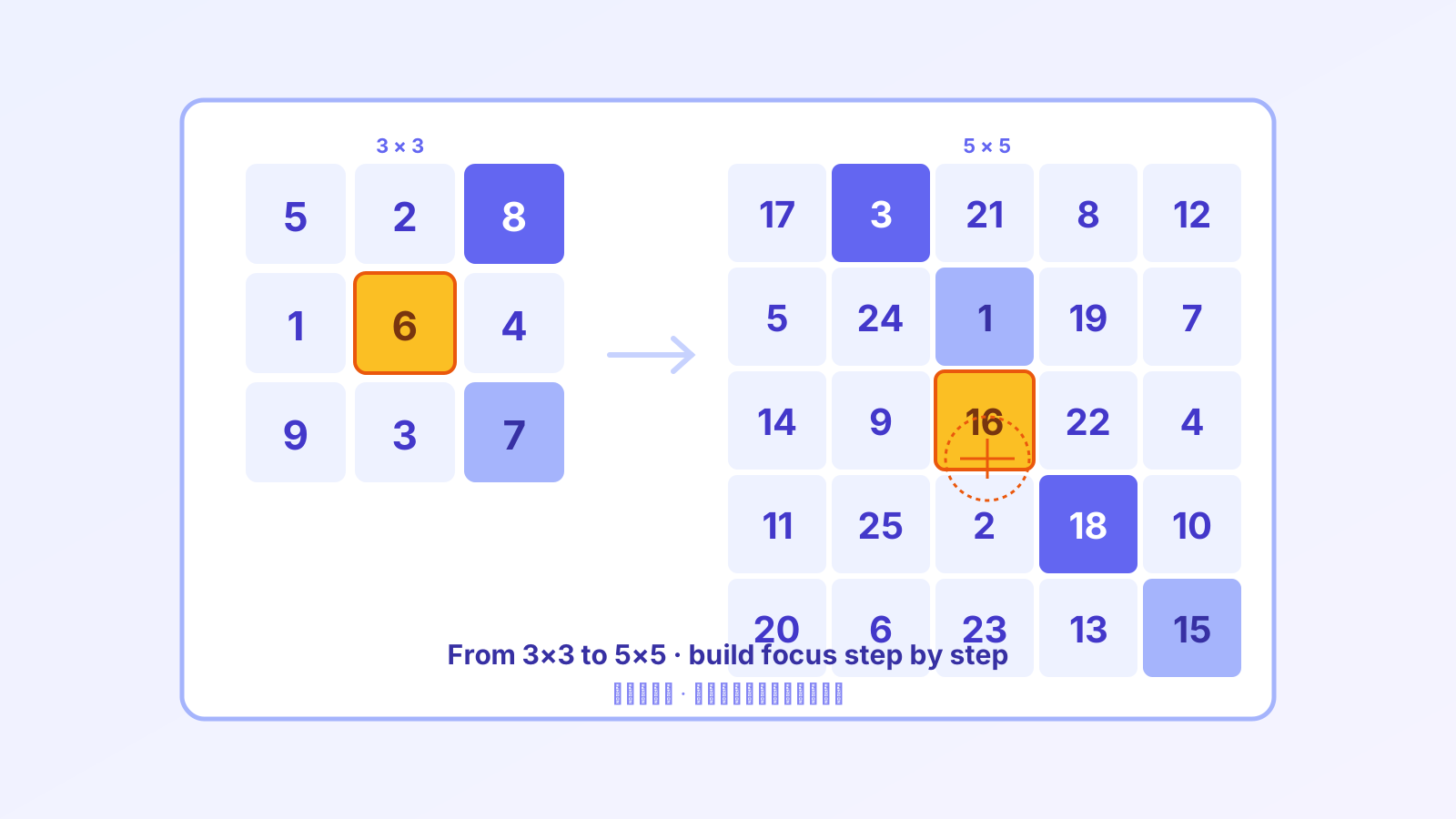
Do not start with the 5×5. For a child in Kindergarten, 1st or 2nd grade, a 3×3 grid (nine numbers) is the right entry point. The goal at this stage is not speed — it is understanding the rule and finishing without frustration. Once they can do 3×3 calmly and confidently, move to 4×4, and only then to the standard 5×5.
- Sit upright, eyes about a foot from the screen or paper.
- Gaze stays on the center cell. Tapping with a finger is fine at first; phase it out later.
- Parent stays quiet. No hints, no counting along, no "hurry up".
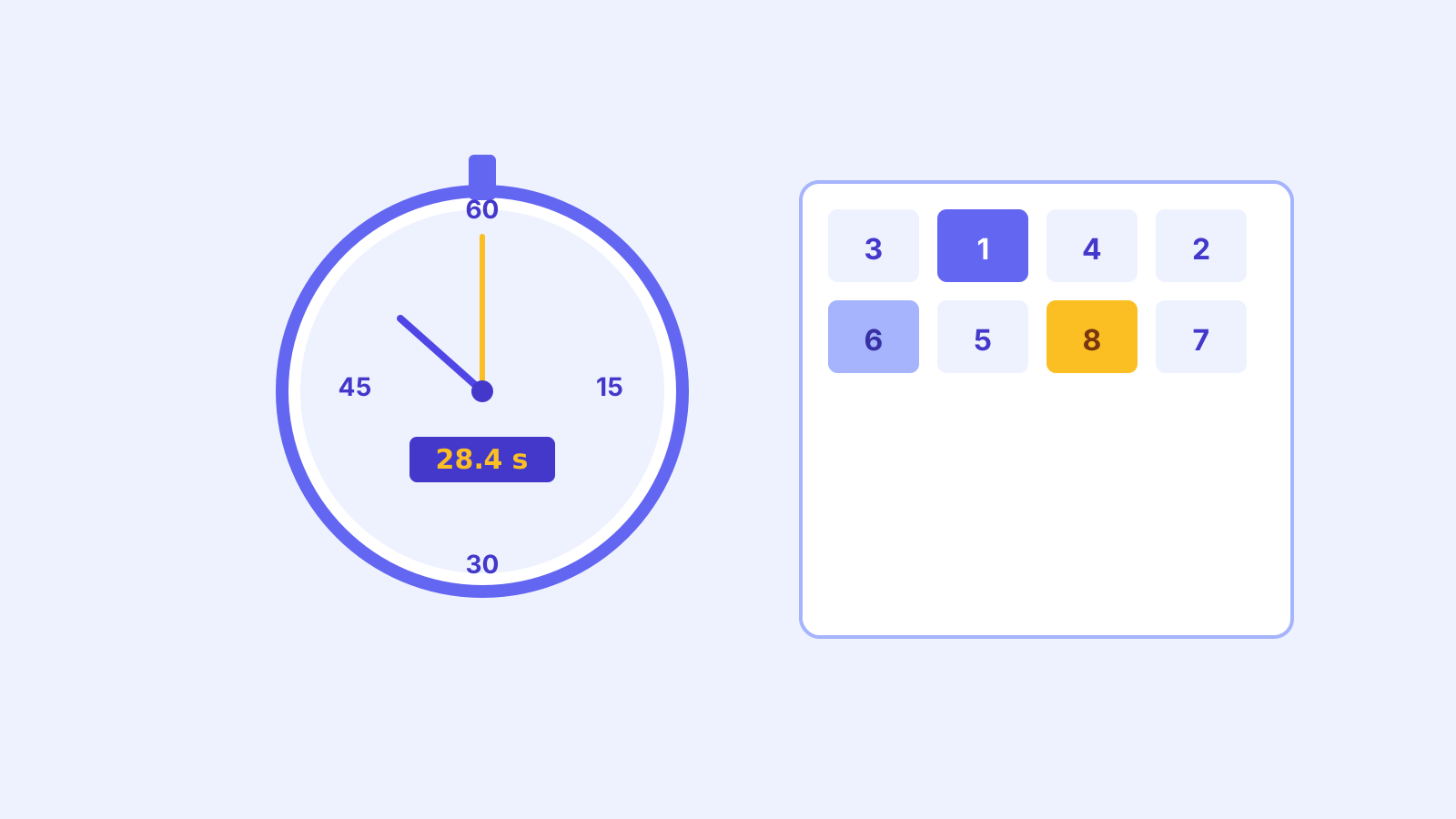
- Record the time. A simple chart on the fridge is enough.
That chart matters more than you might think. When a child watches their own time drop from 90 seconds to 50 to 30, the sense of "I am getting better at this" is its own reward. That self-efficacy is what keeps them coming back — far more than any sticker chart or screen-time bribe you could offer.
What times to expect (and what to ignore)
For a 6- to 9-year-old trying 5×5 for the first time, finishing in under 40 seconds is solid, under 30 is strong, and with consistent practice, dropping toward 25 seconds is realistic. These are rough ranges, not pass-fail lines. Development runs on its own clock, and a child who is two months slower today may be two months faster next term.
The number that matters is not the single best round. It is the trend over weeks. If your child’s median time is drifting down, the training is working, even if today’s round was slower than yesterday’s. Sleep, mood, hunger and screen brightness all swing a child’s time by 10–20% from one sitting to the next. Compare week to week, not day to day.
Keeping it from getting boring
- Letter grid. Swap 1–25 for A–Y. Same drill, and it sneaks in alphabet practice for kids still learning letter order.
- Sight-word grid. Take your child’s weekly spelling or sight words (Dolch, Fry, or the list from school), put one word per cell, and have them find the words in the order you call out. It turns spelling practice into an attention drill.
- Reverse order. Count down from 25 to 1. It loads the prefrontal cortex more heavily because the brain has to suppress the natural forward-counting habit.
Rotate these in every few days. The goal is not to make the grid harder — it is to keep the child from zoning out because the task has become too familiar. A bored child is not training attention; they are just going through the motions.
The mistakes most parents make
- Chasing speed. Pushing a child to go faster turns the drill into a source of anxiety. The point is the focused process, not the final number. If a child starts dreading the grid, the benefit is already gone.
- Noisy environment. Training next to a playing tablet or a loud TV defeats the purpose. The whole exercise is about filtering distraction — you cannot practice that while being actively distracted.
- Training when tired or overstimulated. A fatigued brain does not learn well. Forcing a round right after screen time or when a child is already cranky just links the grid to bad feelings. Pick a calm window — right before homework works well, as a warm-up.
- Stopping and starting. Attention gains have a use-it-or-lose-it quality. Five minutes every day beats an hour once a week. A simple checkmark on the calendar is enough to build the habit.
The Schulte grid is not a cure for distraction and it is not a shortcut around real learning. It is a small, cheap, boringly consistent way to give a child’s attention muscle a daily workout. Five to ten minutes a day, done without drama, is enough. Do that for a month and you will usually see a child who sits a little longer, reads a little more smoothly, and gets through homework with a little less friction.