Brain Training Games for Kids with ADHD: What They Can Help With (and What They Cannot)
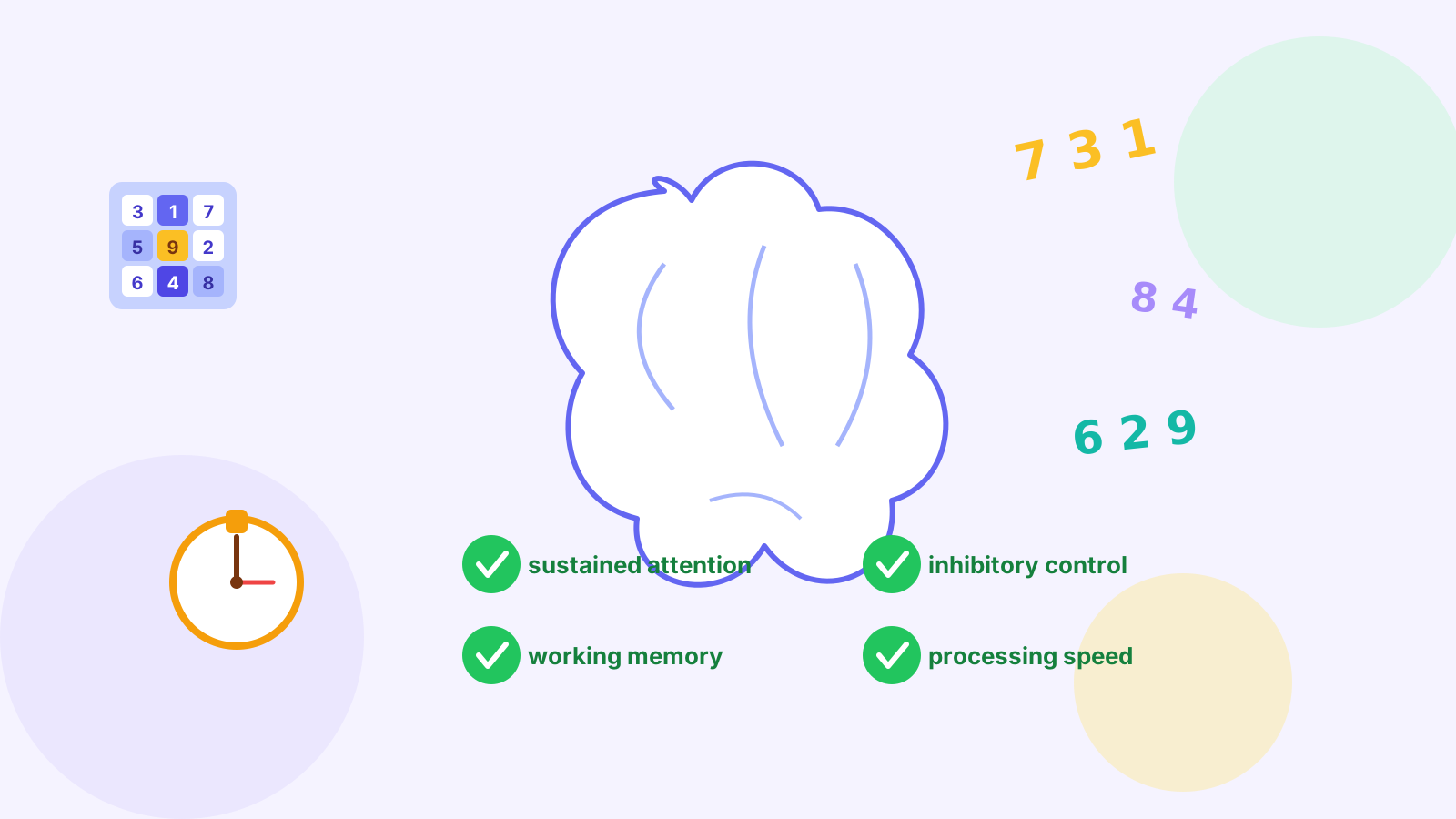
Brain games do not treat ADHD and cannot replace professional care. But they can give a child low-stakes practice of the exact skills ADHD makes hard — sustained attention, working memory, inhibitory control and processing speed. Here is what the research actually shows, and how to use them responsibly.
If your child has been diagnosed with ADHD — or even if you are just starting to look into it — you have probably already read a dozen articles claiming brain games can rewire the brain, lift grades, or take the place of professional treatment. The honest version is more nuanced. Brain training games do not treat ADHD, and they cannot replace a treatment plan designed with a doctor or psychologist. But they can be a small, useful support tool — because several of the skills ADHD makes hard are exactly the skills these games are built to exercise.
The four skills ADHD commonly stretches thin
- Sustained attention — staying on one task long enough to finish it, even when a phone or a stray thought pulls you away.
- Working memory — holding a few pieces of information in mind long enough to use them: remembering a three-digit direction, doing mental math, following a two-step instruction.
- Inhibitory control — the ability to wait and not act on the first impulse. The "stop and think" muscle.
- Processing speed — how quickly you can read, recognize and respond to information.
These are the classic executive-function skills that clinicians and researchers have linked to ADHD for decades. They are not character flaws and they are not laziness. They are the skills the school day demands constantly, and when they are uneven, daily life becomes disproportionately harder.
Which of our games train which skill
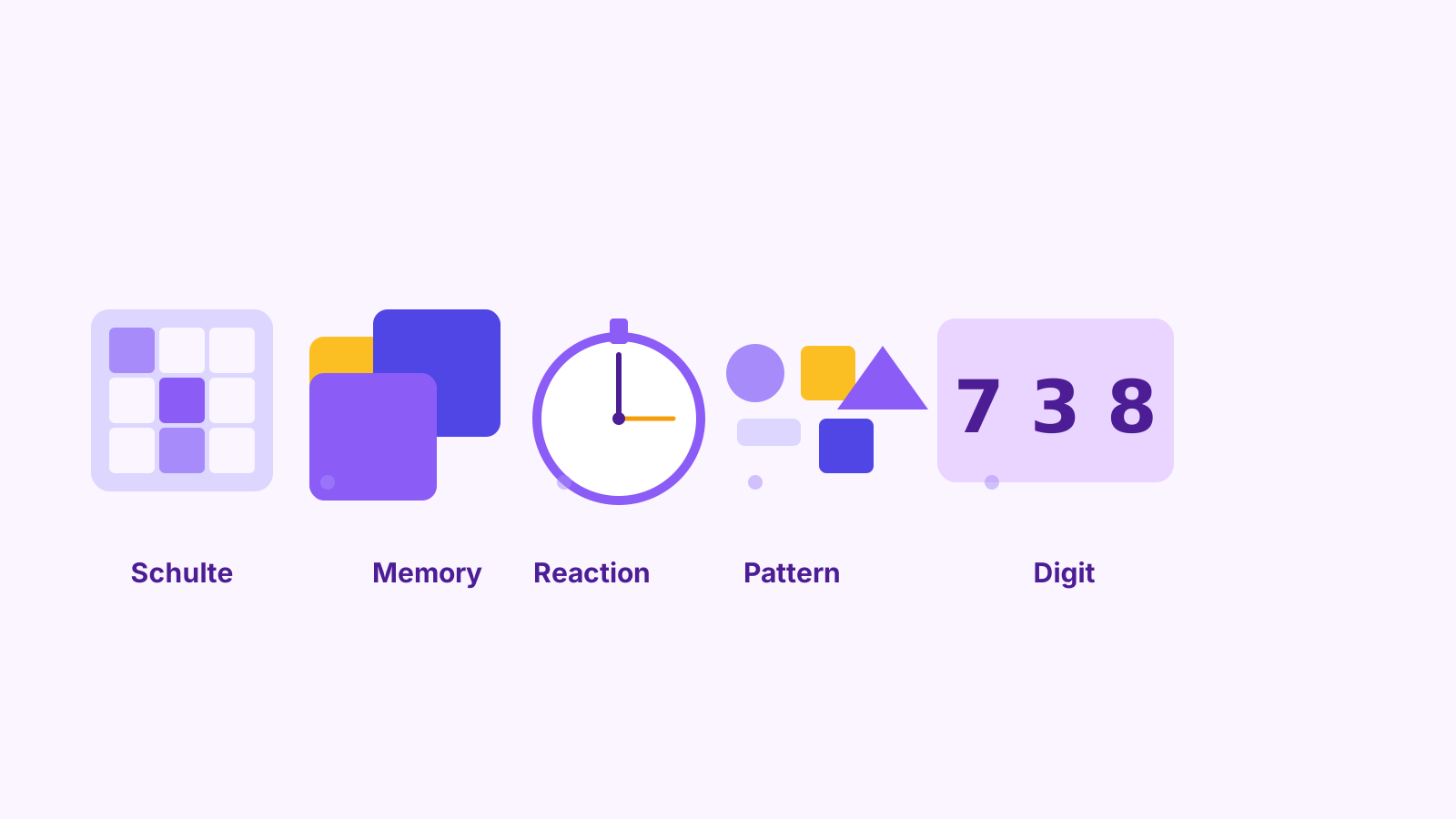
- Schulte grids (square, circle, triangle, hexagon) → sustained attention and controlled visual search. You hold your gaze at the center and find numbers in order, treating every other number as a distractor. That is, in essence, a sustained-attention drill.
- Digit span memory game → working memory. A sequence of digits flashes on screen and you type it back, directly practicing the "hold a few items in mind" function.
- Match pairs → visual working memory and recognition memory. You flip cards, remember where a match was, and use that memory on the next flip.
- Reaction time test → inhibitory control and processing speed. The rule is to wait, wait, wait, then respond the instant the screen turns red. That "wait for the signal" step is an inhibition exercise.
What the research actually says (and does not)
This is where honesty matters. The research on brain training is genuinely mixed. The largest randomized trial, ACTIVE, followed 2,802 older adults across six US cities and reported its results in JAMA in 2002 and 2006. It found that speed-of-processing training produced small but real gains on the trained tasks and slight functional benefits. A 2013 meta-analysis by Melby-Lervåg and Hulme, reviewing 23 working-memory training studies, found that performance on the trained tasks improved reliably — but the gains did not transfer to IQ, fluid intelligence, or real-world outcomes.
For children, the picture is the same. Games can improve how a child performs on the game itself and on very similar tasks. Whether that turns into better math grades or calmer behavior at dinner is not something any study has reliably shown. So the realistic framing is: these games exercise specific cognitive skills. They are a gym for attention and memory, not a treatment.
Why it can still be worth doing
The most useful thing about these games is not what they measure but the fact that they make practice possible. A child who resists a worksheet will often happily race a stopwatch. A ten-minute Schulte session is structured, low-stakes, and gives immediate feedback — three things that are hard to get from homework. The goal is not to fix anything in one session. It is to give a child repeated, low-pressure practice with the exact skills school punishes them for not having, and to build a small habit of showing up.
How to use these with a child: the parent rules
- Keep sessions short. Five to ten minutes is the right window for a child whose attention wanders. Longer sessions produce frustration, not gains.
- Compare only to their own past performance. A child who took 70 seconds and now takes 62 improved. Never compare to benchmarks or siblings.
- Treat it as play, not homework. The moment a child sees it as a chore, the practice stops being useful. Celebrate small wins.
- Do not use scores as rewards or punishments. A round slower than yesterday is not a failure — it is one more data point for their own trend.
- Watch for signs of overload. If a game causes regular meltdowns, it is not helping. Switch to an easier mode or take a break.
The line to never cross
This site is free, and it is not medical care. If you suspect your child has ADHD, the right first step is a professional evaluation by a pediatrician, child psychologist, or psychiatrist. Medication, behavioral therapy and school accommodations are evidence-based treatments that brain games cannot substitute for. Use these games as a small side dish — never as the main course, and never instead of what a professional recommends.