Schulte Grid 5×5: The Complete Guide
The 5×5 is the default for a reason: big enough to demand real scanning, small enough to practice daily. Rules, benchmarks, mistakes, and a four-week plan.
If you only ever do one Schulte size, it should be 5×5. The 3×3 is a warm-up, the 7×7 is an endurance event — but 5×5 is the dose most research and coaching centers on, and the size where technique improvements show up fastest.
The rules, stated precisely
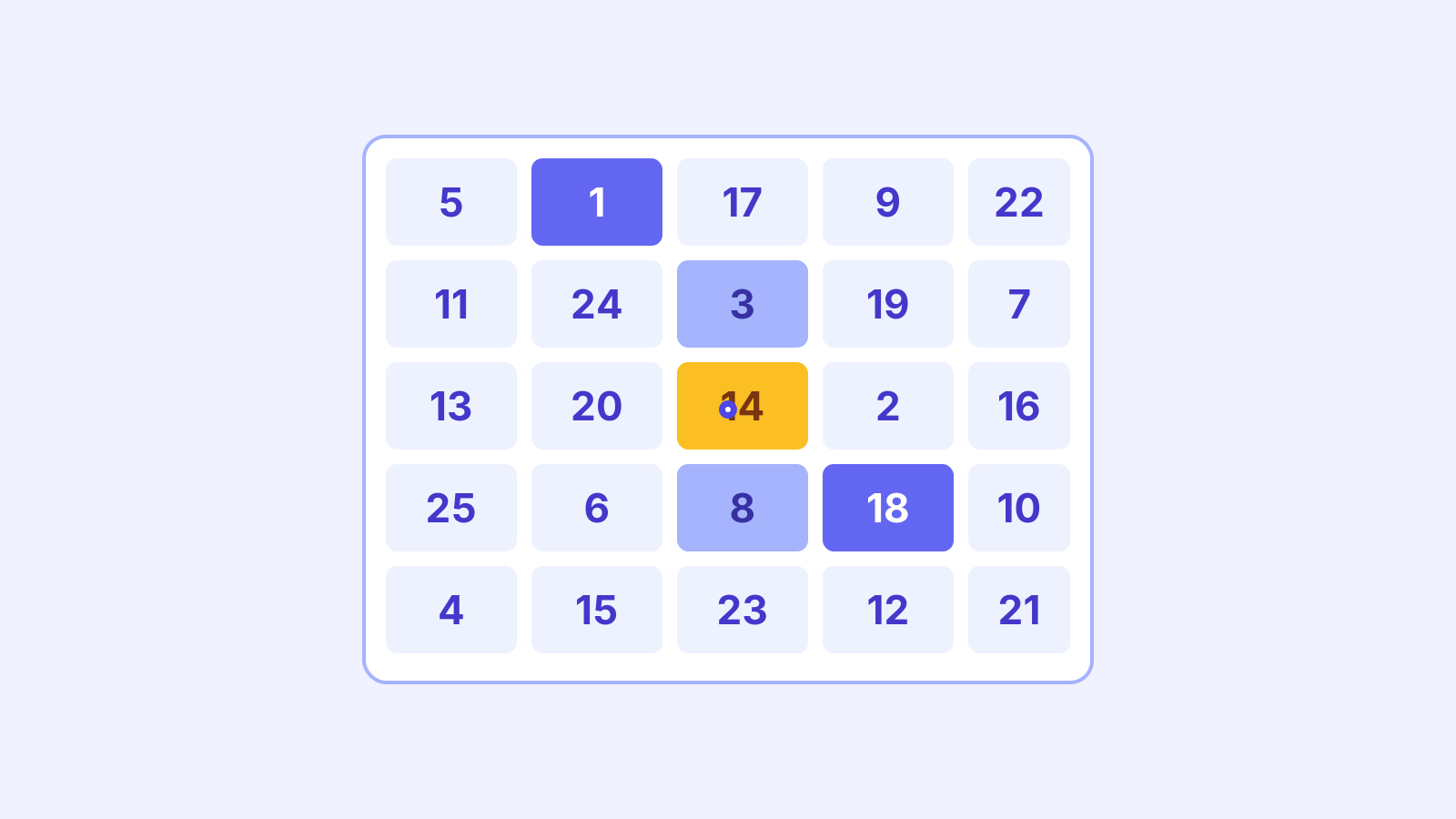
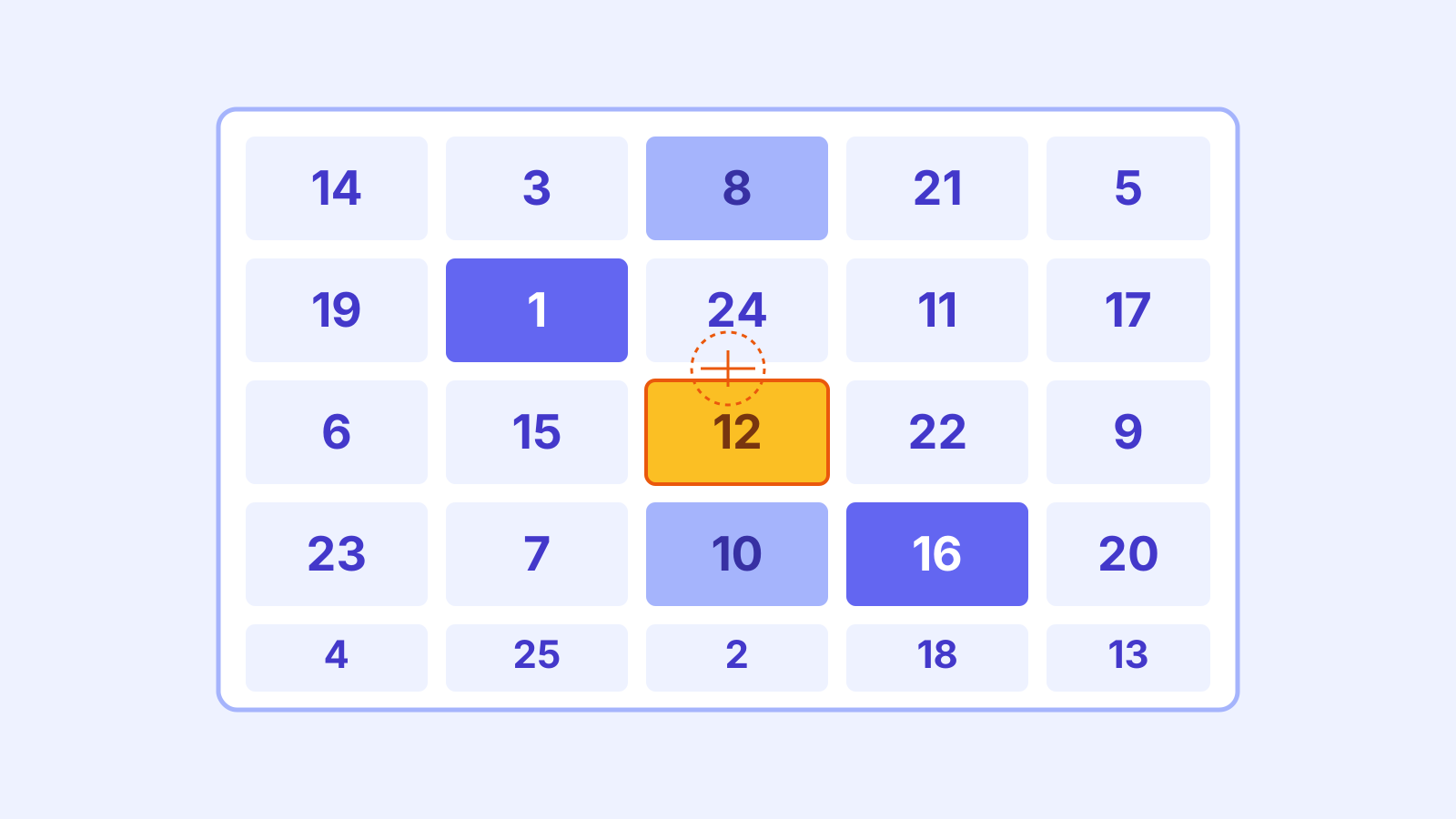
- 25 cells, numbers 1–25, shuffled. Find and click them in ascending order.
- Timer starts when the grid appears and stops on 25.
- Keep your gaze on the center cell. Reading targets with peripheral vision is the point of the exercise.
- A wrong click counts as a miss and does not advance the sequence. Do not restart on mistakes — error recovery is part of training.
What the numbers mean
First-timers usually finish in 45–60 seconds. With daily practice, many adults reach 25–35 seconds within their first few weeks, though how quickly this happens varies widely — much of that early gain is simply learning the gaze technique. Trained practitioners sit around 20 seconds; under 15 is elite. Judge yourself against your own week-one baseline, not screenshots online — posted times are heavily selected.
Three mistakes almost every beginner makes
First, chasing numbers with the eyes. It feels faster and measures worse as attention training. Second, clicking instantly when a peripheral "number-shape" registers — peripheral resolution is low and you will misread 6 for 8, or 3 for 8, constantly. Pause a fraction of a second to confirm. Third, marathon sessions. Attention is a finite resource; after about ten focused rounds the quality collapses and you are just training fatigue. Ten good rounds beat thirty sloppy ones.
A four-week plan that actually fits a normal schedule
- Week 1 — technique. 6–8 rounds per day, gaze discipline only. Ignore your time entirely. Yes, ignore it.
- Week 2 — volume. 10 rounds per day, same 5×5. Start noting your session median.
- Week 3 — comparison. Add one 6×6 round at the end of each session to feel the contrast, then return to 5×5.
- Week 4 — variety. Replace two sessions with circle or triangle grids. Many people find their 5×5 scanning feels less rigid afterward, though there is no guaranteed time improvement.
Total time cost: 6–10 minutes a day. People who claim the grid "does not work" have usually either skipped week one (never trained the gaze rule) or judged results after three days. Give it the full month before you decide.
One practical note: do the sessions on roughly the same conditions each day — same device, similar lighting, similar caffeine state. You are measuring small changes, and uncontrolled variables will swamp the signal. The grid rewards boring consistency more than heroic effort.